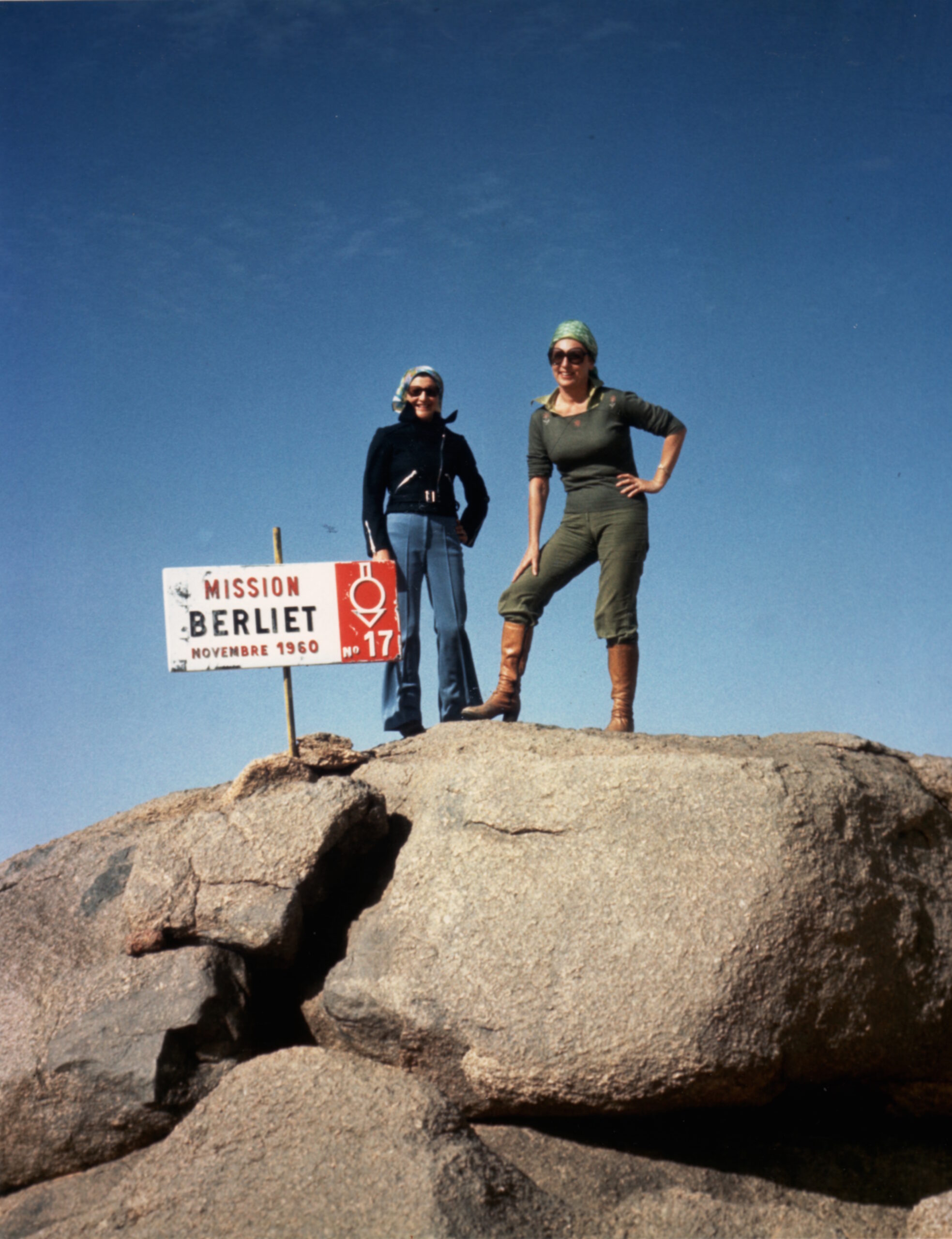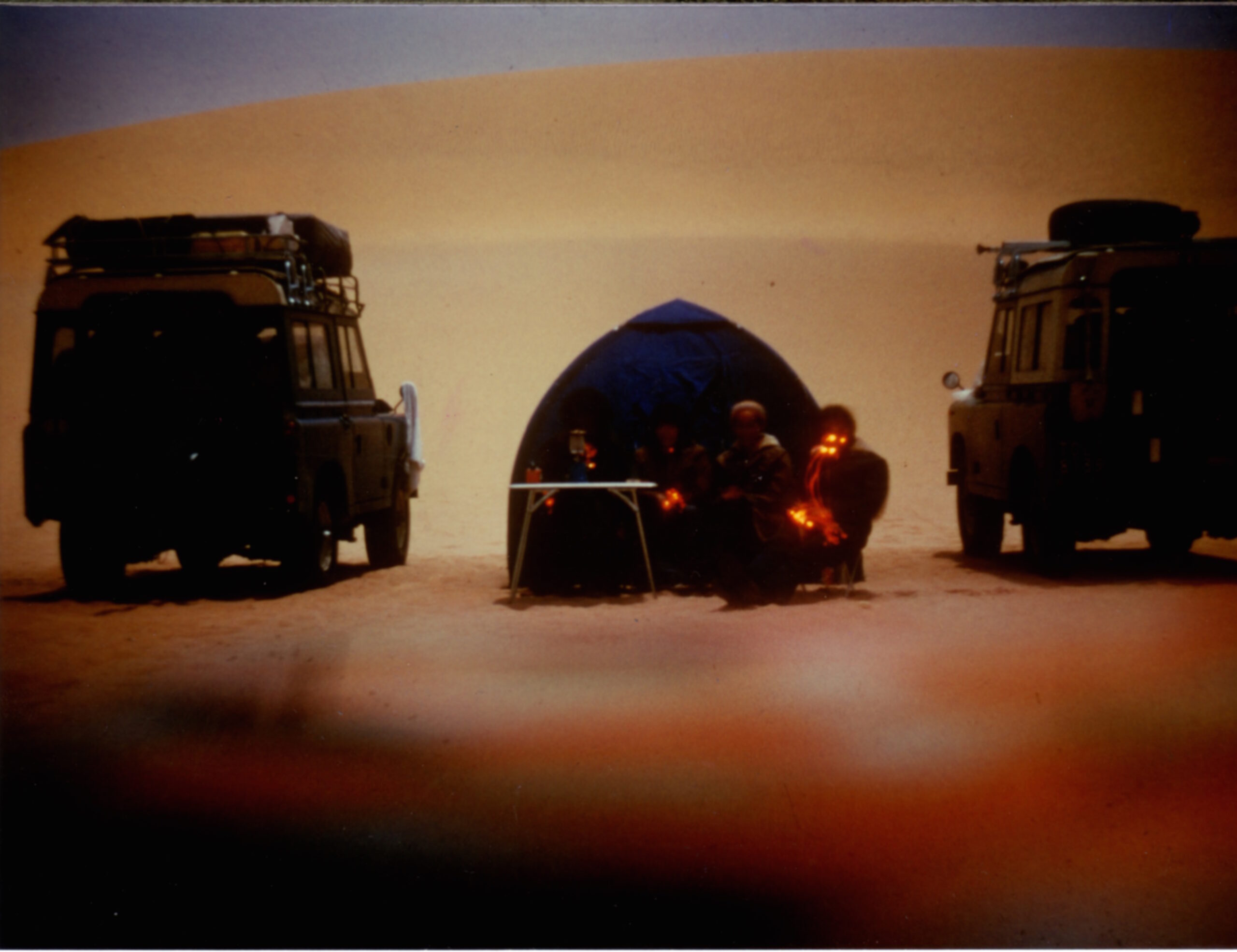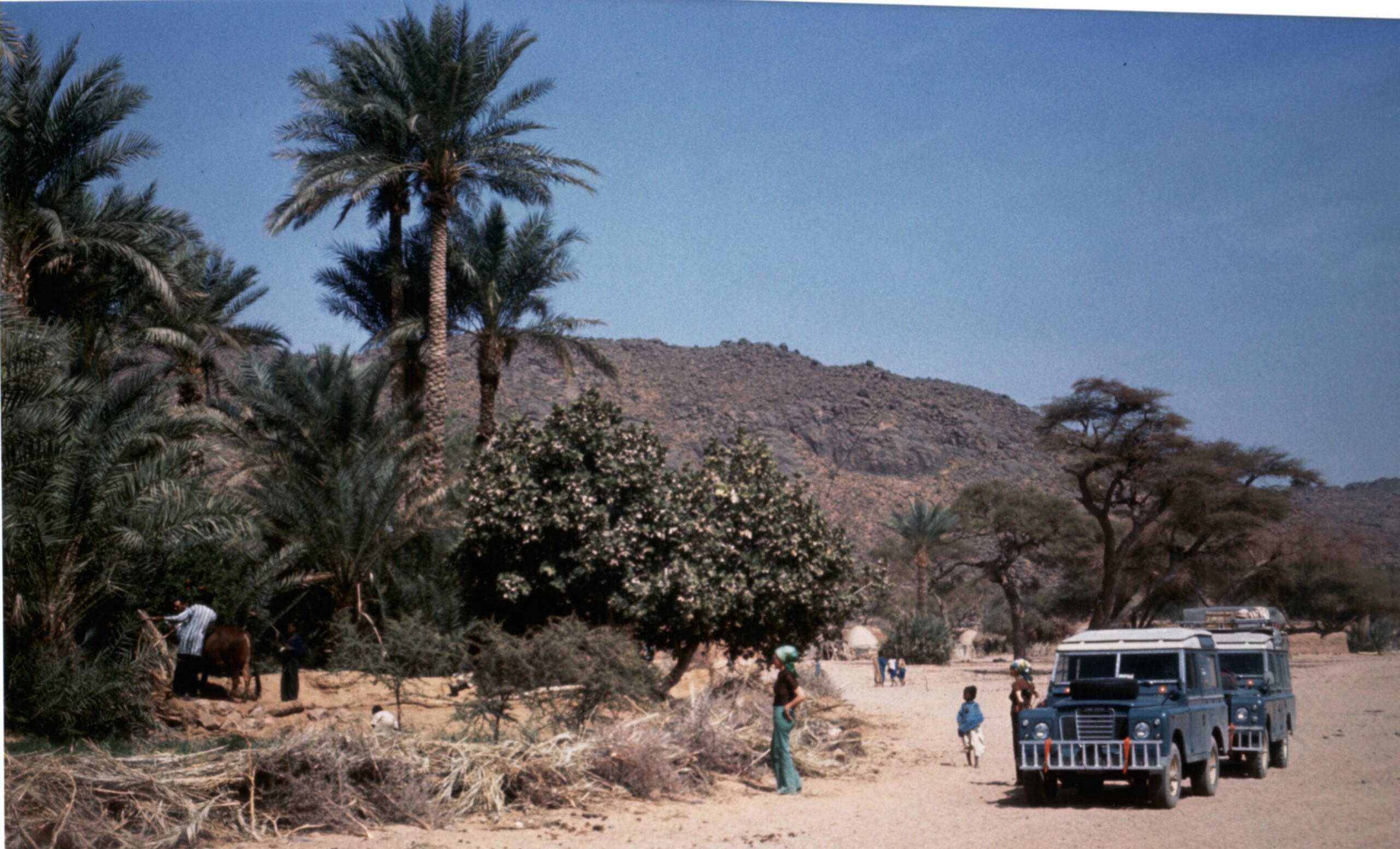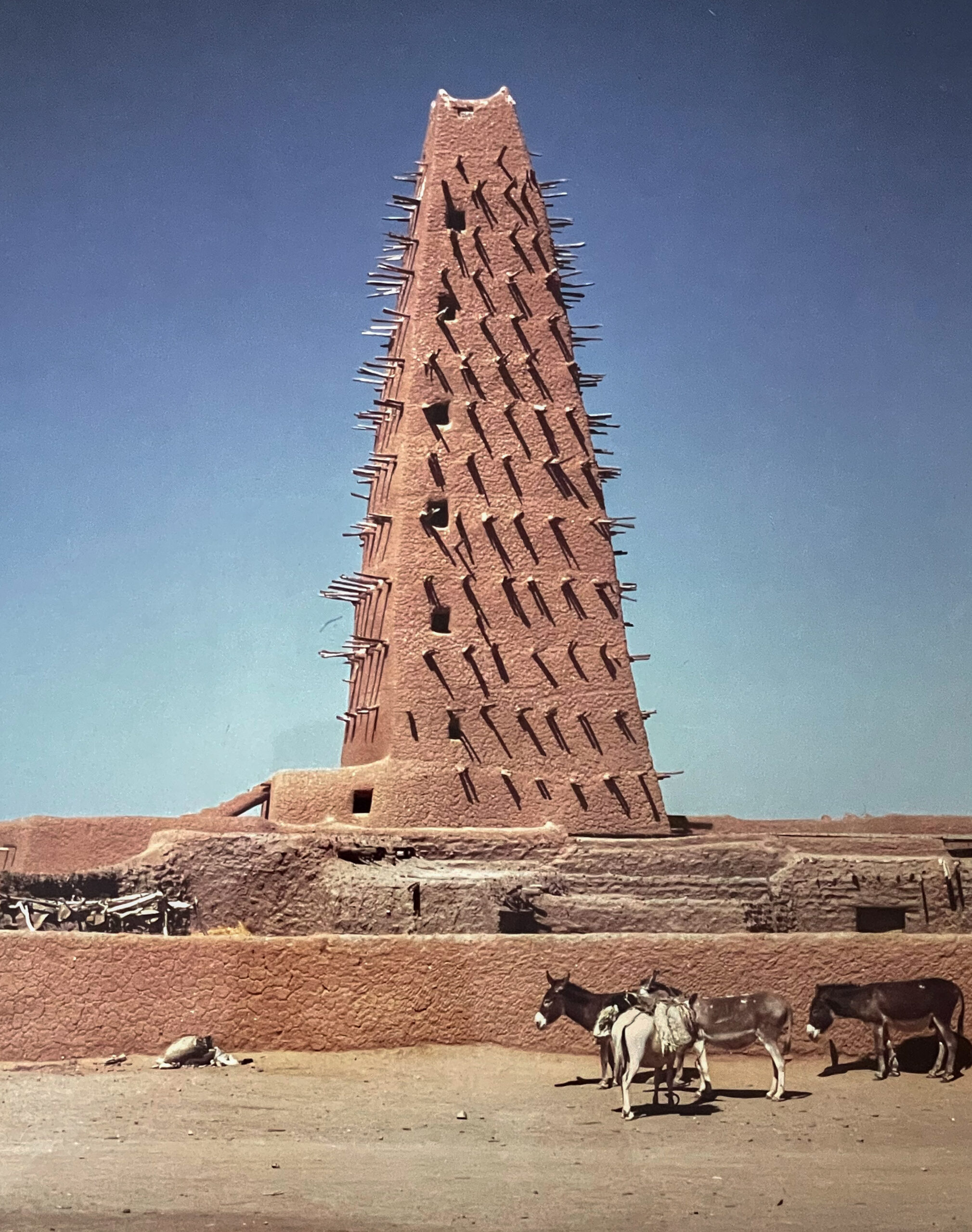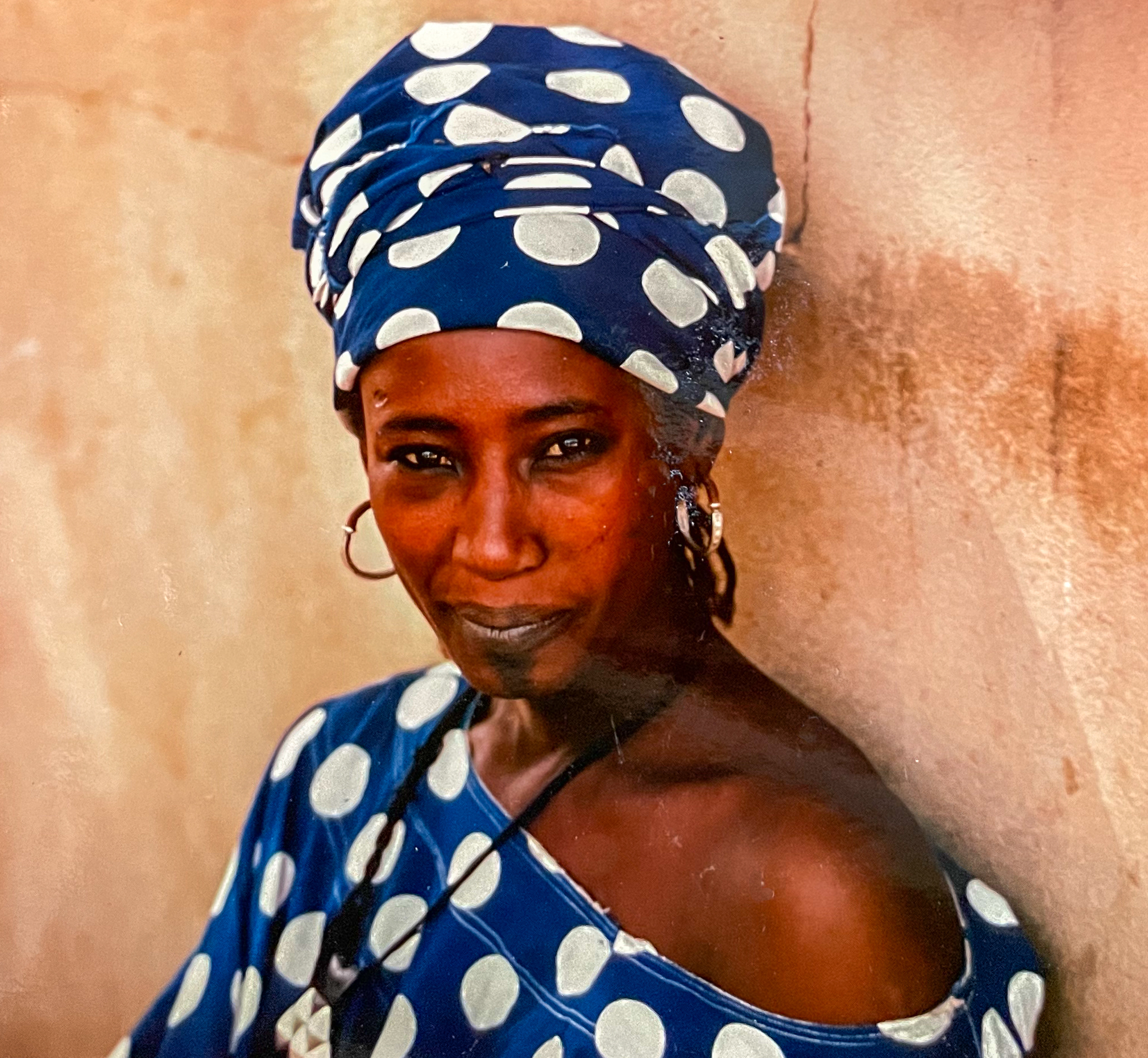
In the 70s, there was no Google for searching, no Socials for networking, and only big companies could afford or know how to use a single computer. The search was in libraries and bookshops, and few of them had information about Overlanding in Africa. Networking was word of mouth between passionates, who somehow got a name and a phone number to get in touch.
Maps were paper maps only, and since it was impossible to zoom in, their scale was essential. For example, it was pretty easy to find the Michelin Map of Western and Northern Africa; however, it was one single sheet covering an area wider than 4,000 miles!
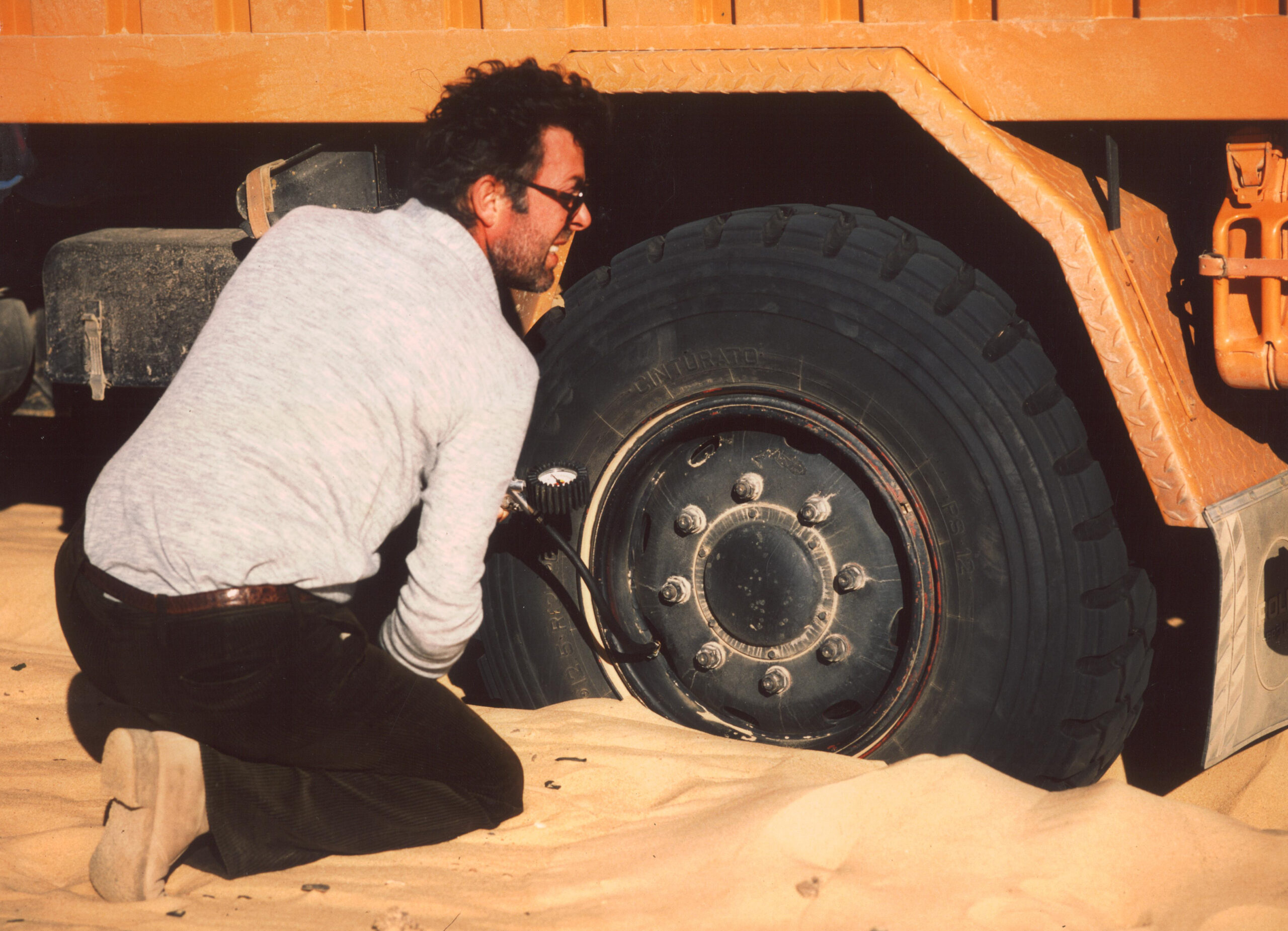
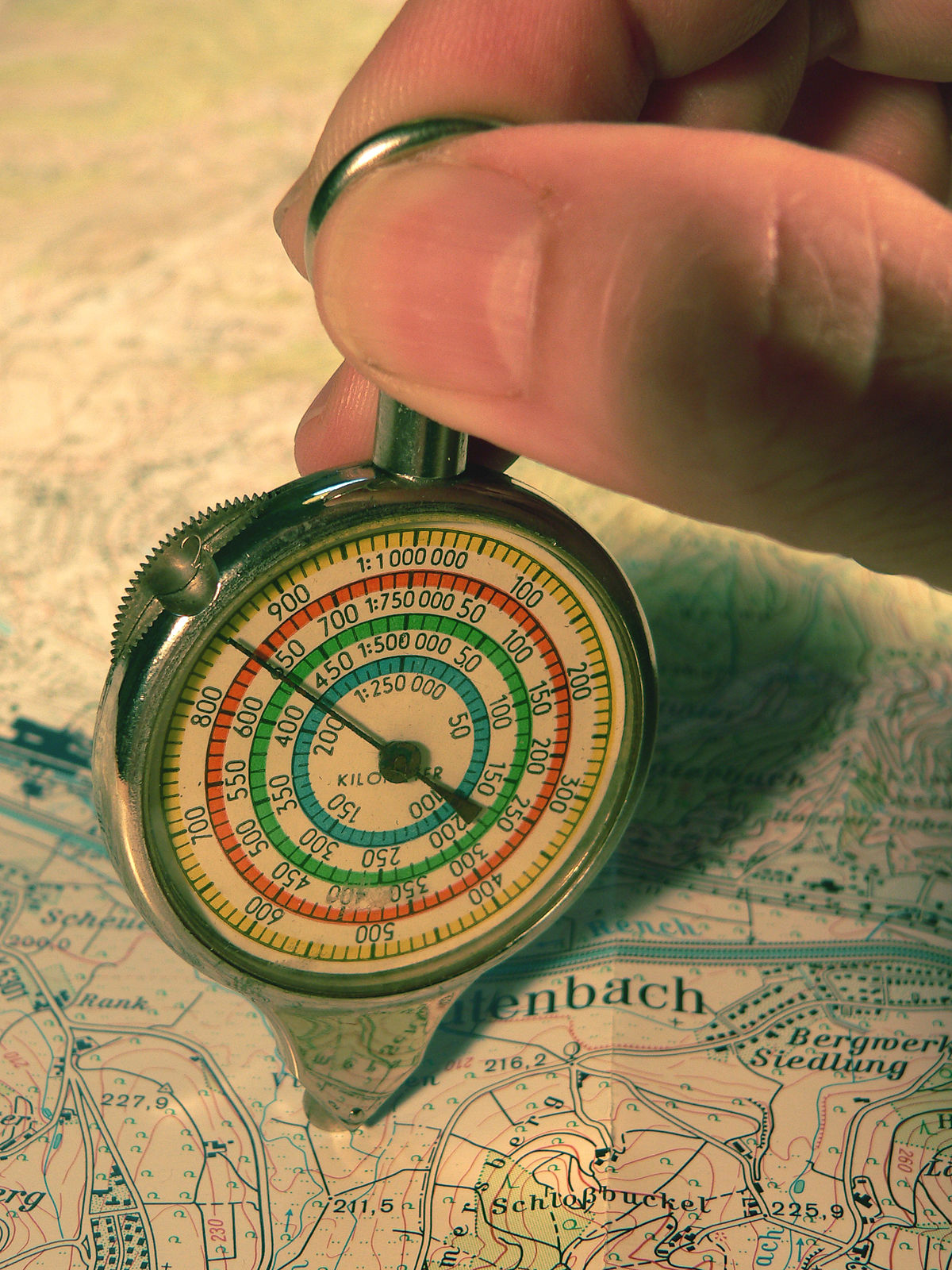
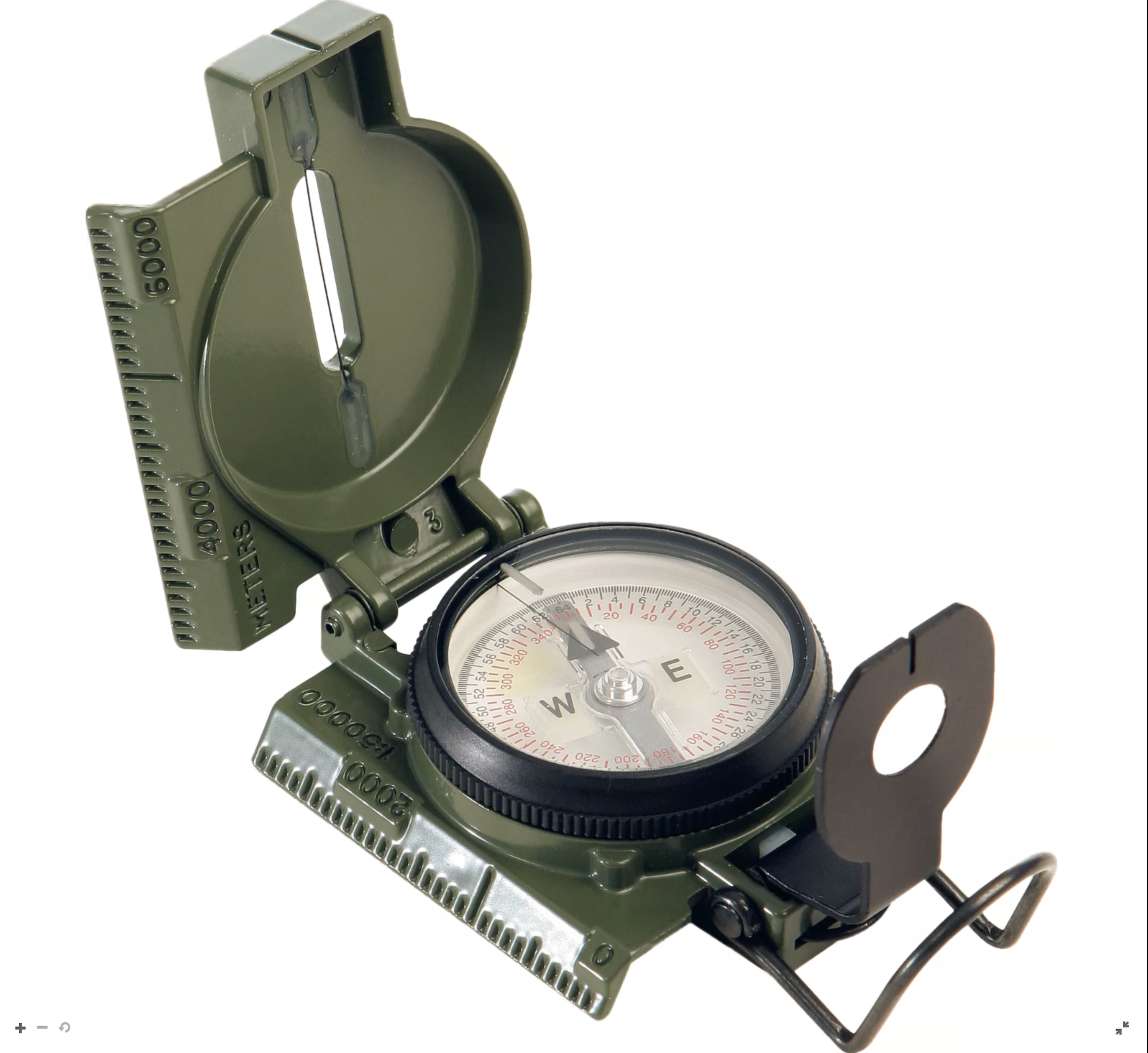
My Father went to Paris, where he knew he would find 1:20,000 scale ratio (1cm = 200m) paper maps and the precious aerial photos that the French shot in the areas when those were their colonies. In our family home in Italy, I still keep his big orange folder with maps and aerial photos, his Opisometer for estimating distances and fuel consumption on the paper maps, his compass, and his tire pressure gauge.
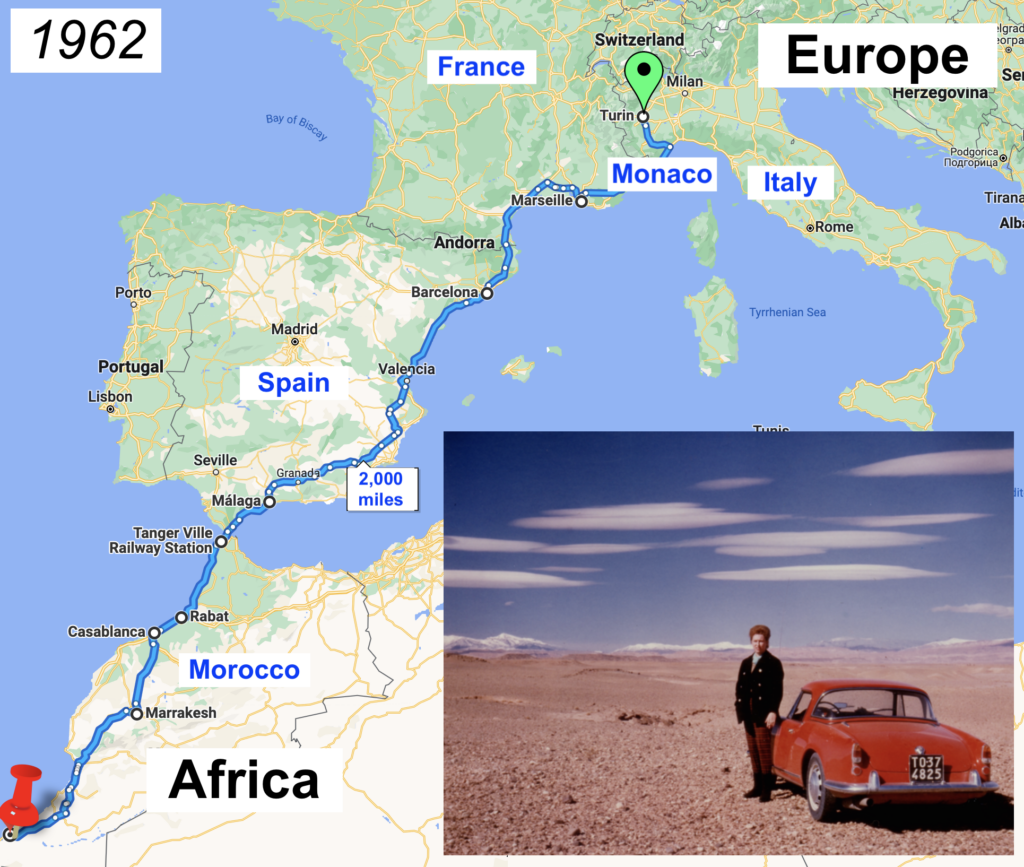
His intense passion for Africa started in 1962, after seeing the movie “Laurence of Arabia”: an epic historical drama film shooted in the Jordan desert.
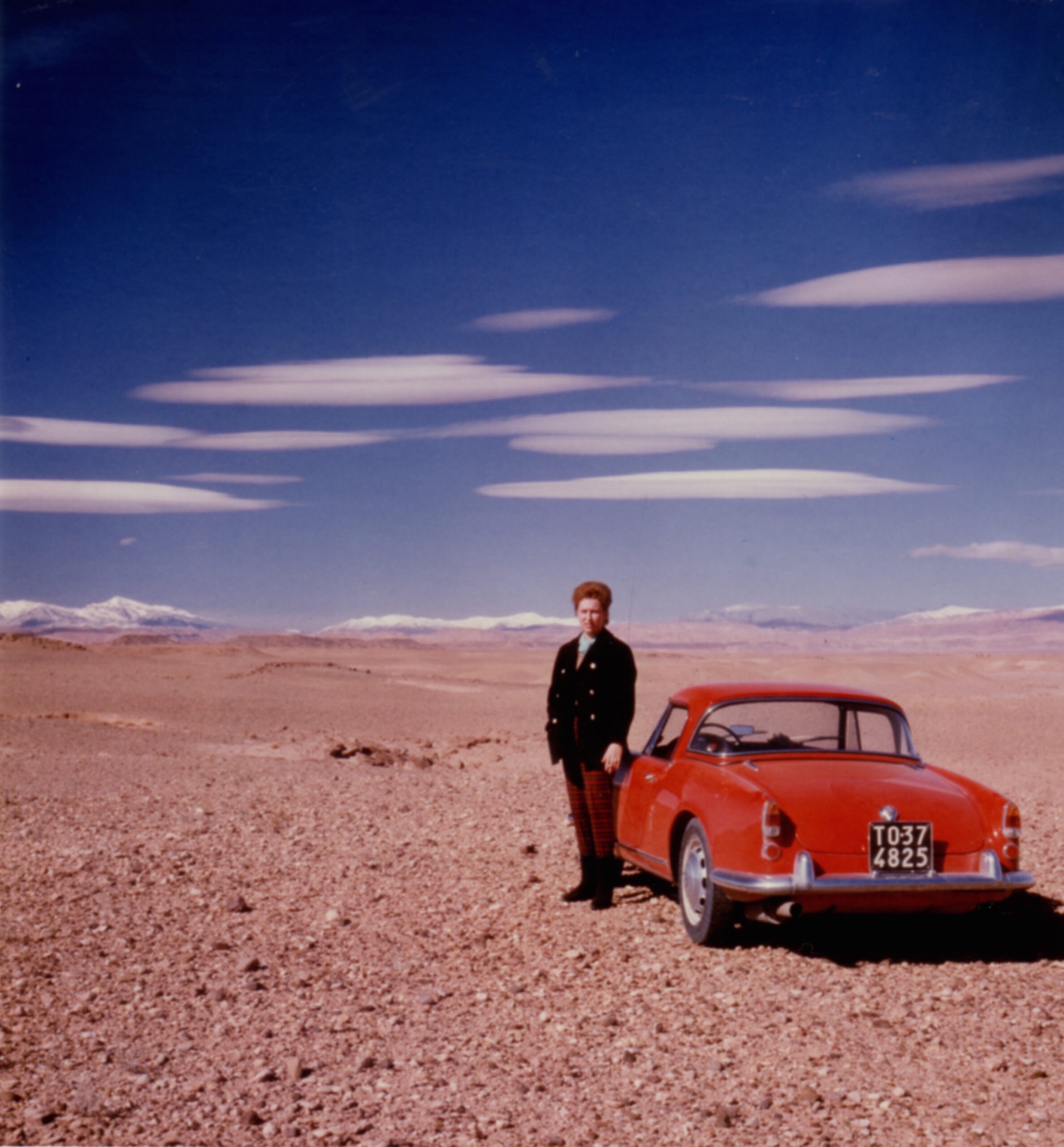
One year later, in 1963, he drove his new bride, my Mother, a city lady, from Turin in Italy to Southern Morocco: 4,000mi in total, about 1,500mi dirt roads, on a red Alfa Romeo Giulietta Spider! He could even get a speed ticket on a dirt road by a Moroccan policeman who measured his speed with a chronometer. Just simple Physics: speed = distance/time. I remember him telling me he broke the cup of the oil reservoir and repaired it with a piece of wood that was still in place at the end of his journey.
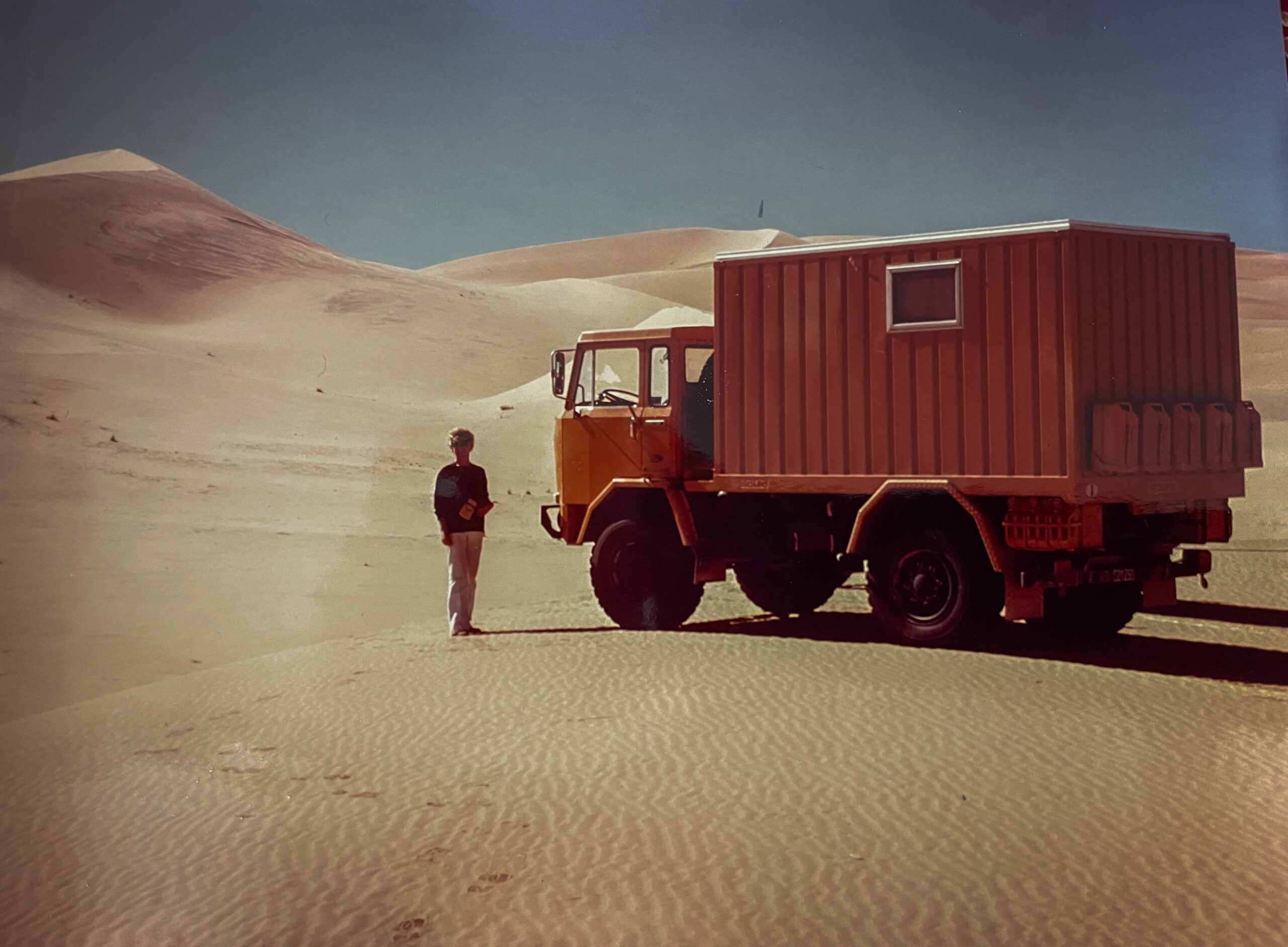
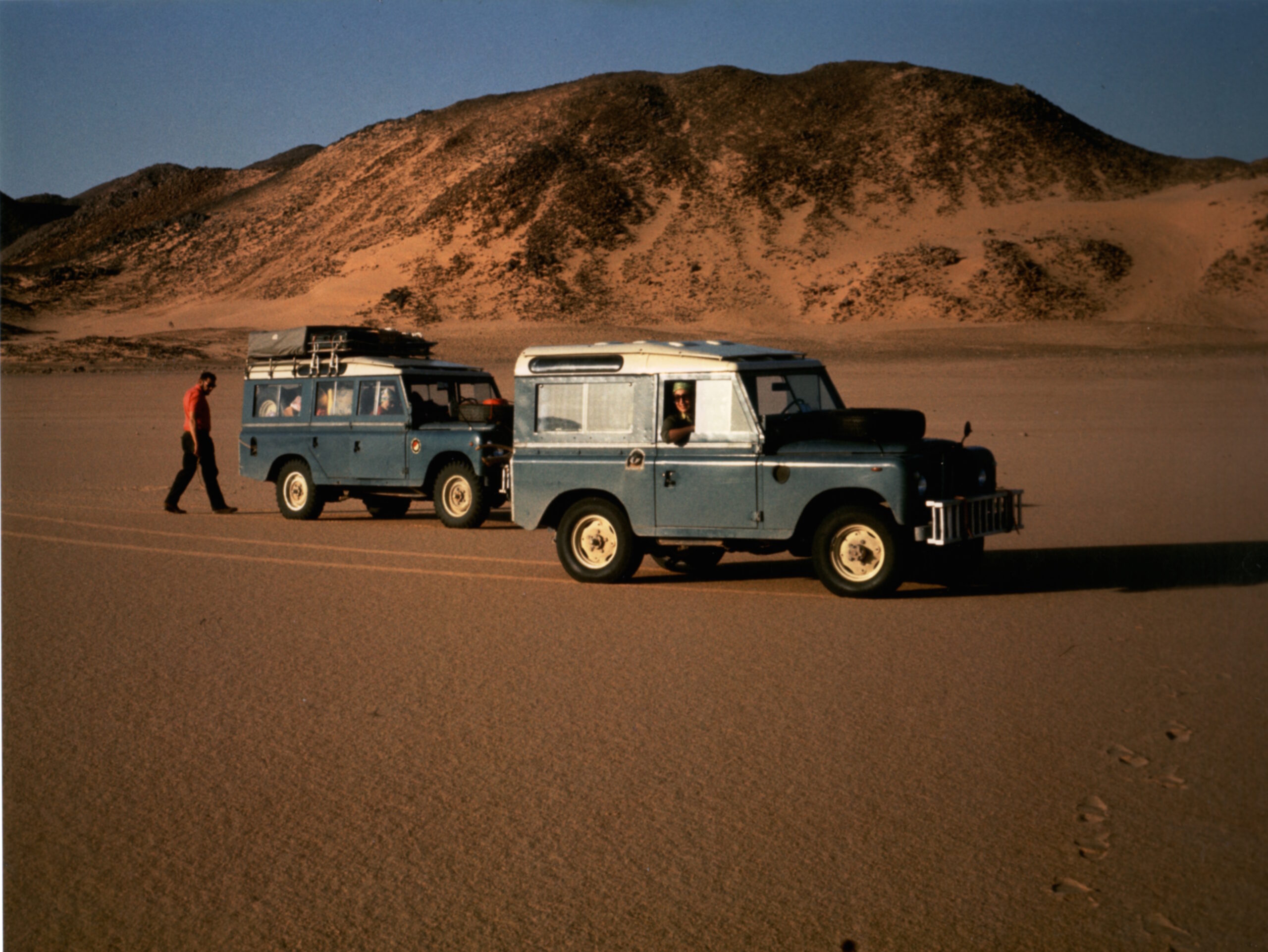
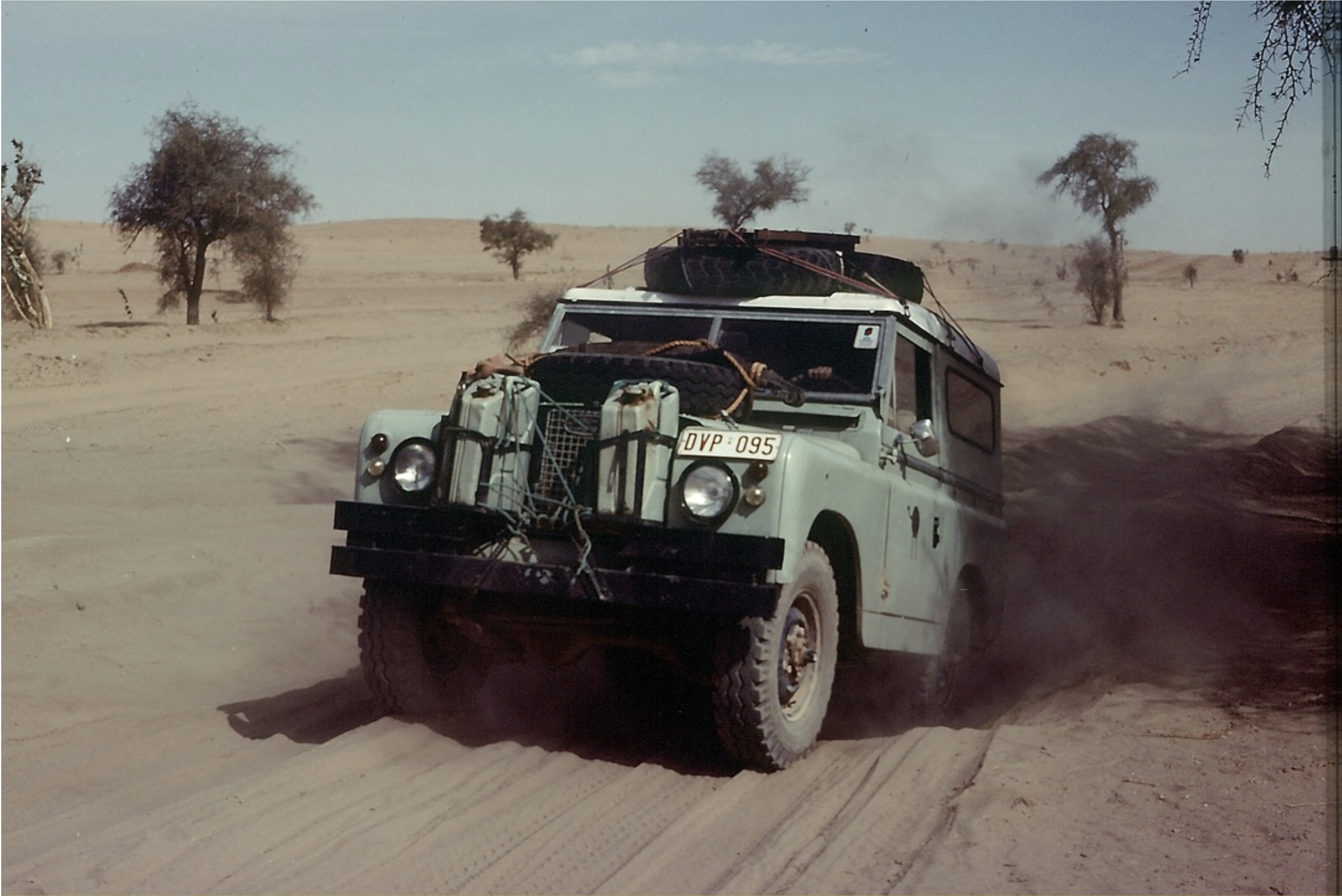
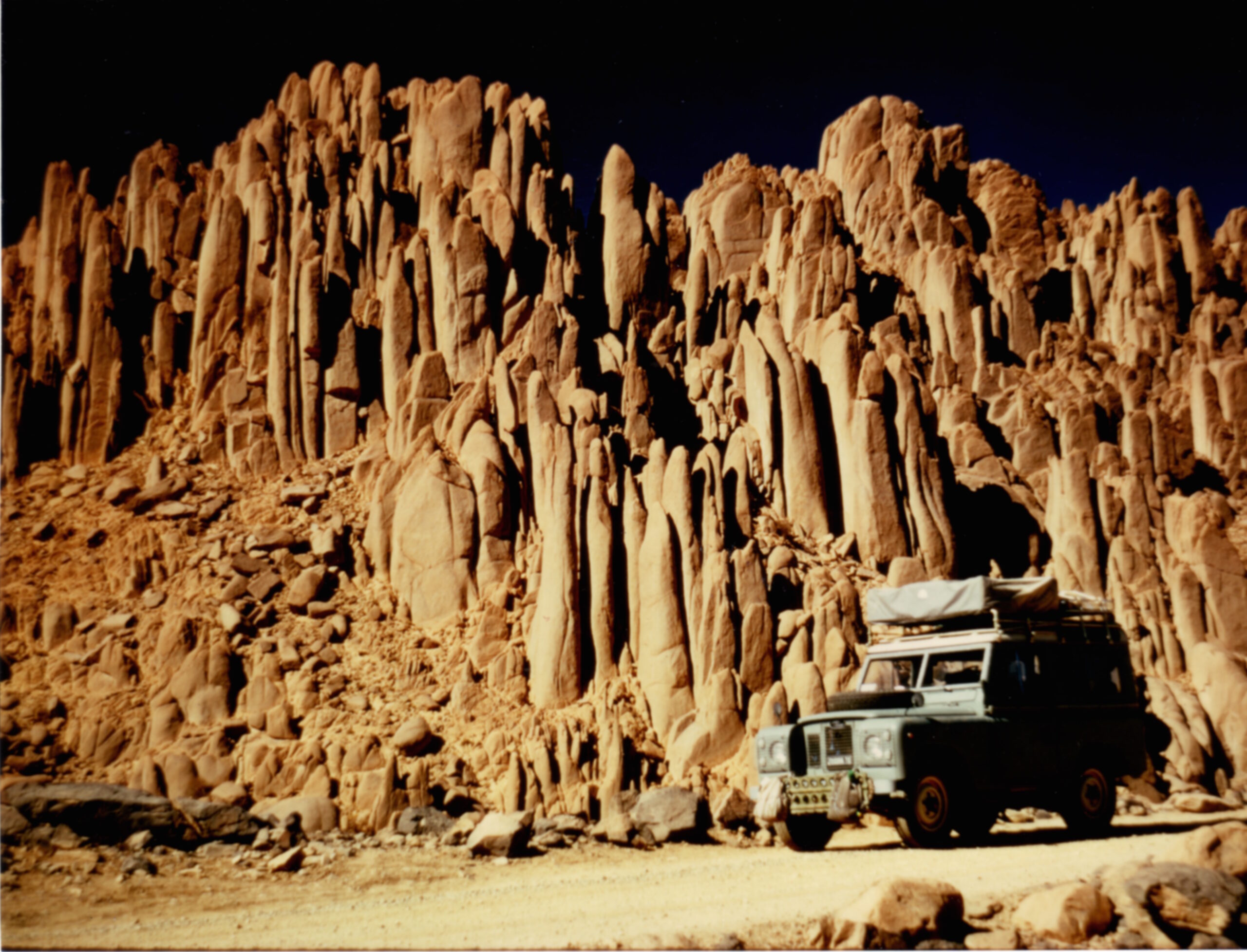
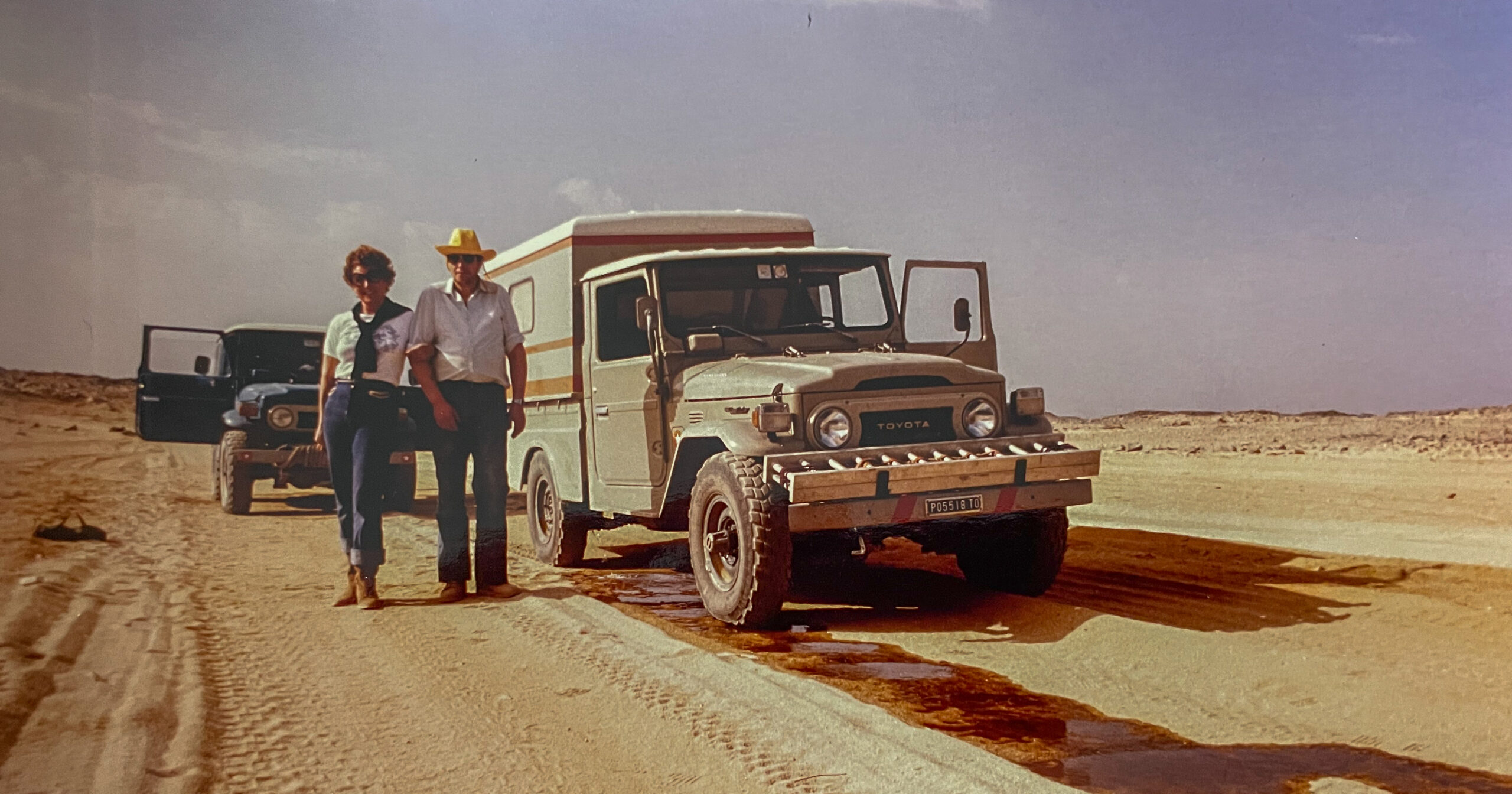
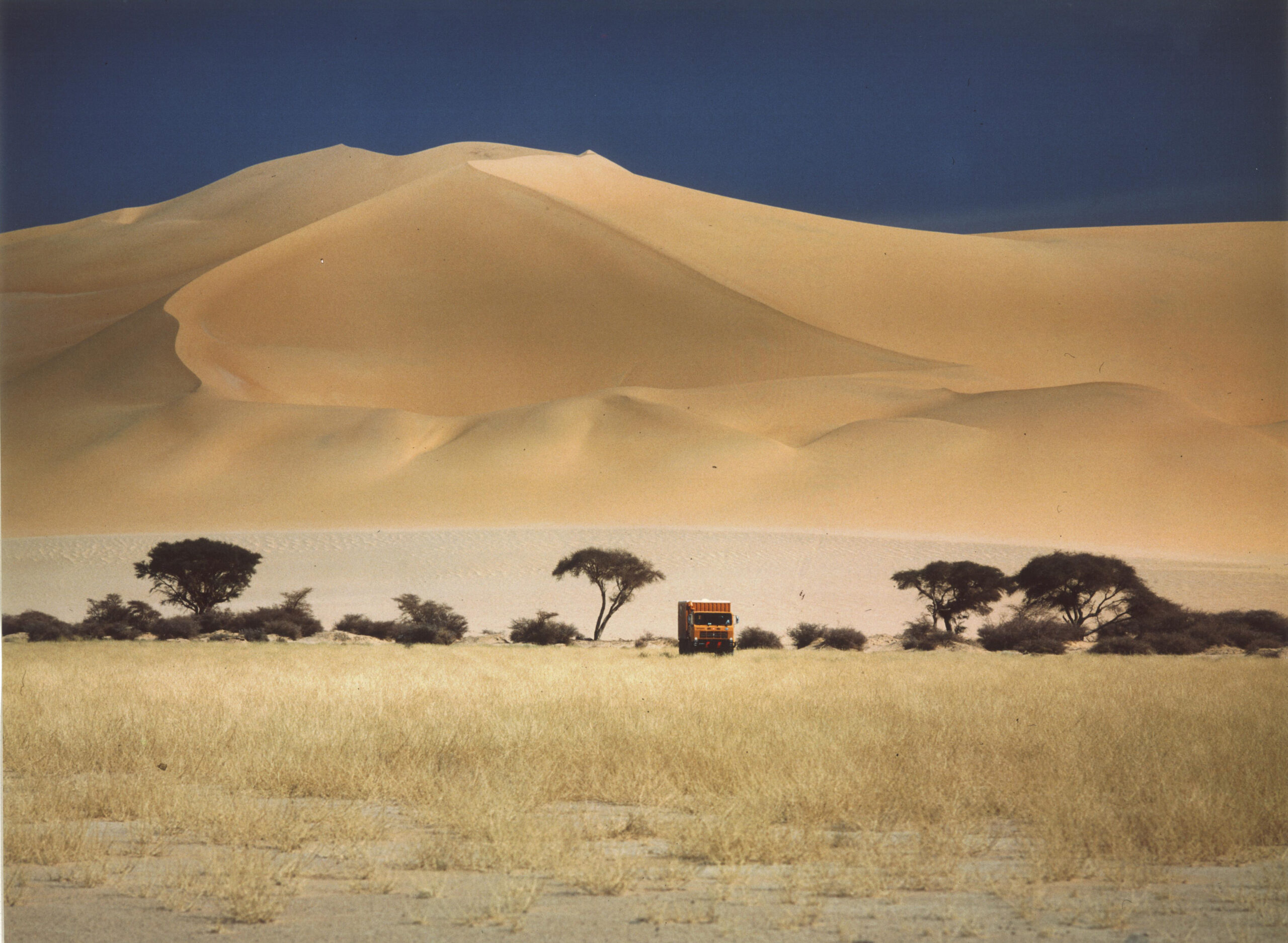
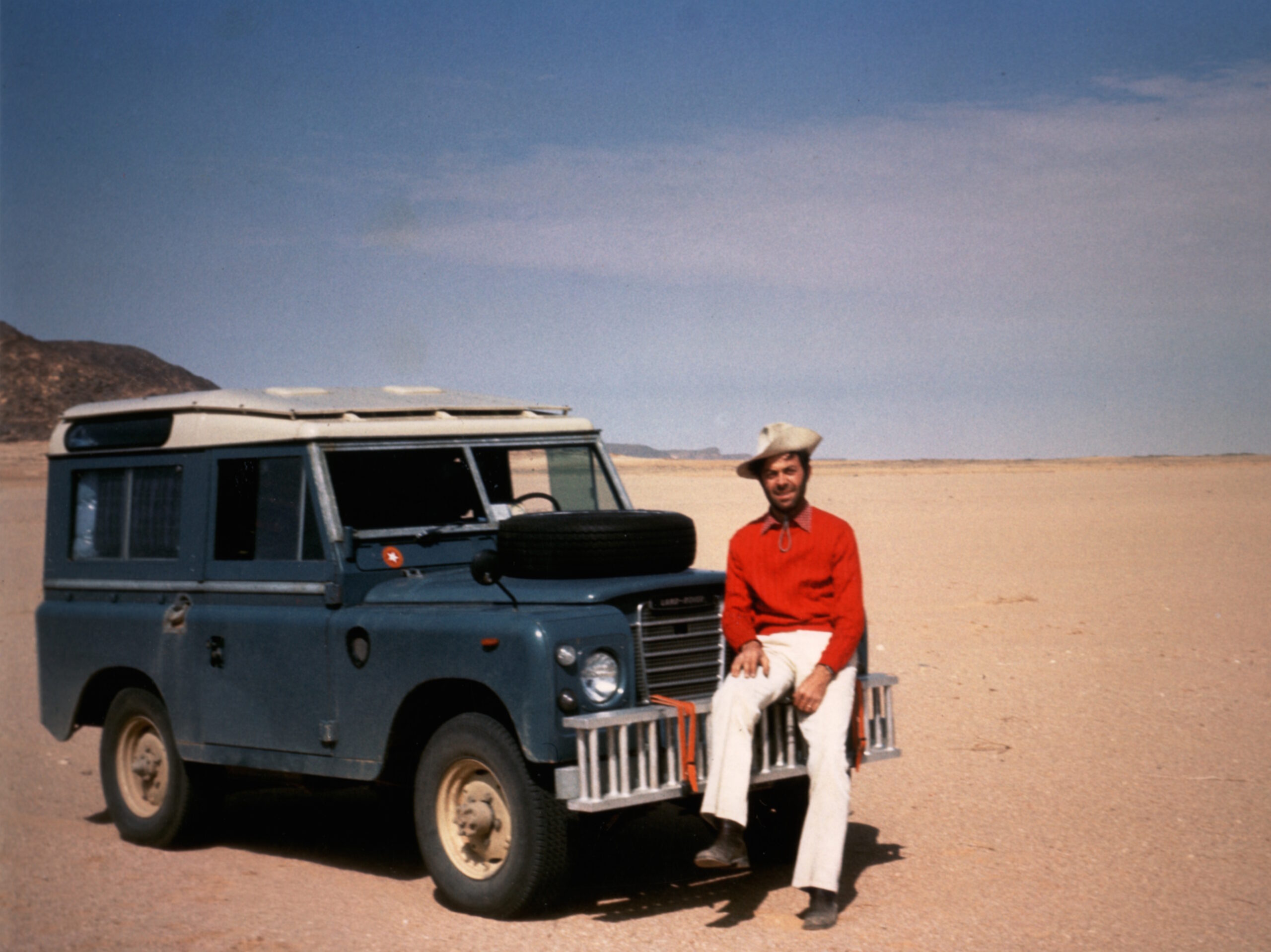
His Africa addiction kept pulling him to overland Sahara for 40-60 days each winter until 1992. However, after this first crazy adventure, he realized the Giulietta was not the proper vehicle for this kind of overland trip and bought the iconic vehicle for the African deserts: a Land Rover series IIA. Other overland vehicles came after this first one: in the 70s, two other Land Rovers Series III, in the 80s, Toyotas FJ45 pickups, then a FIAT OM 75 big truck. I named it “Maciste”: an Italian movie character of the 10s, a Hercules-like figure characterized by his enormous strength. But, unfortunately, Maciste was too big and heavy, affecting fuel consumption. The fuel range is critical when you have to cover hundreds of miles in the middle of nowhere with just a few unreliable gas stations. So, in the 90s, his last overland truck was a pickup Toyota Land Cruiser FJ75 with a roof-top tent.
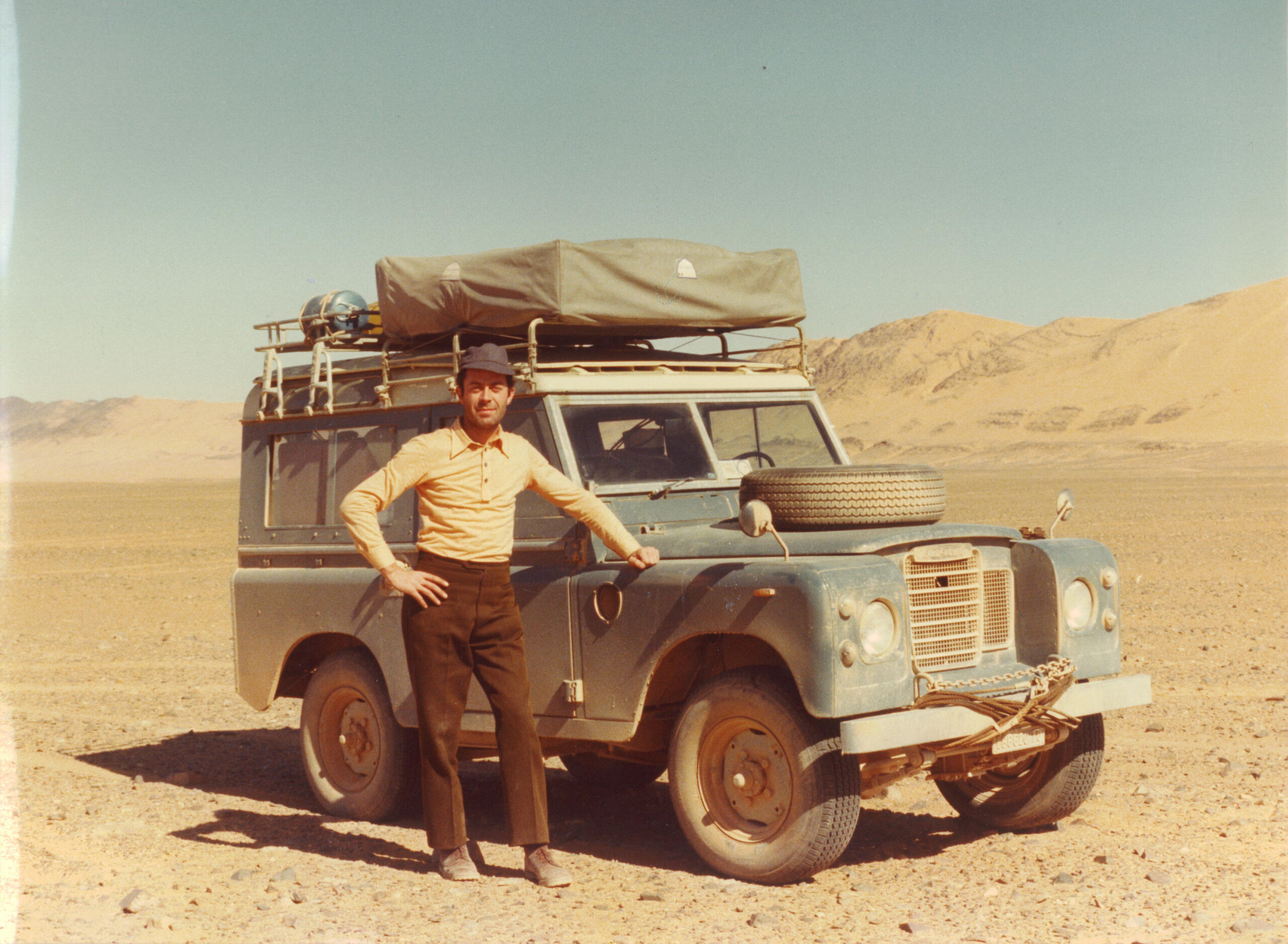
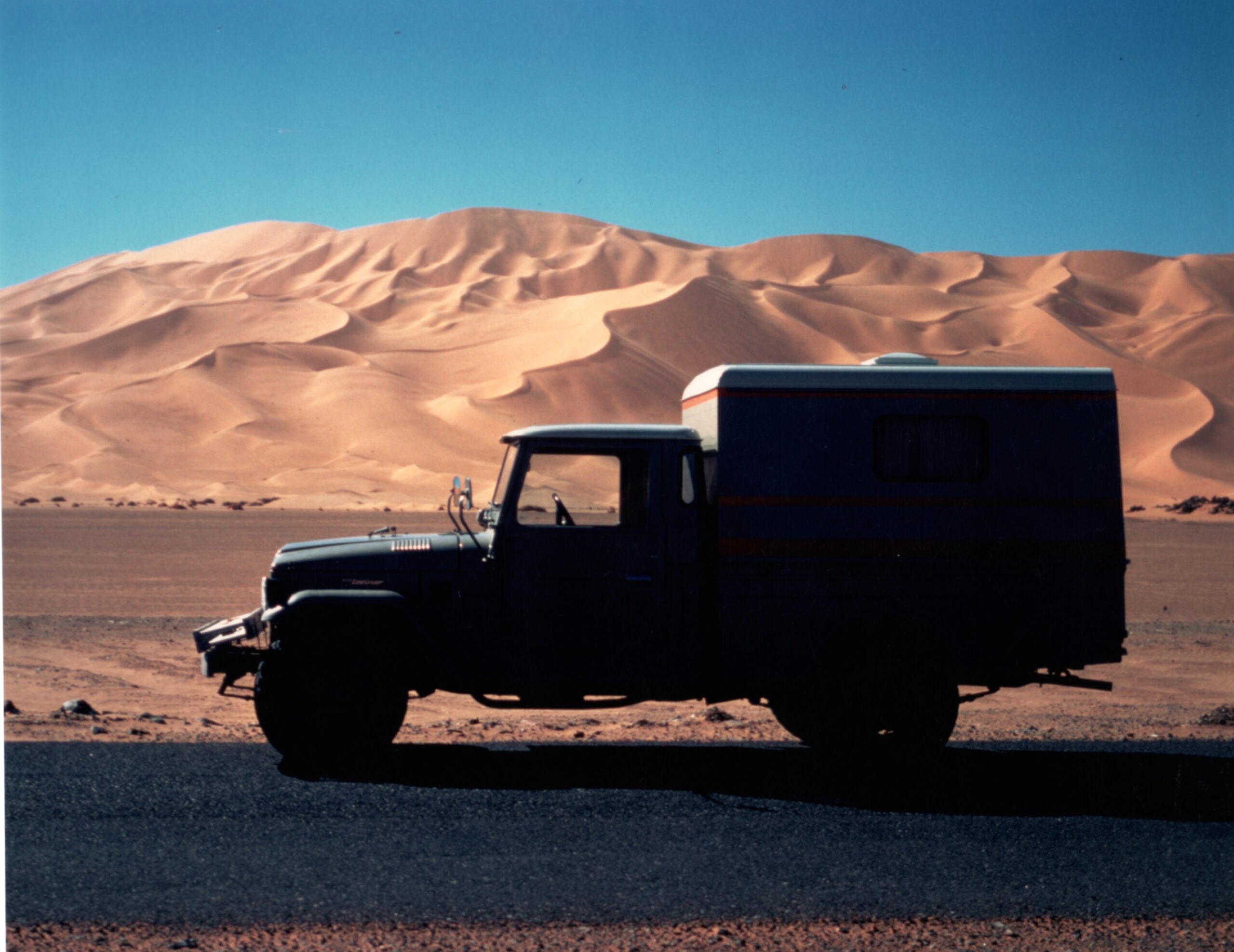
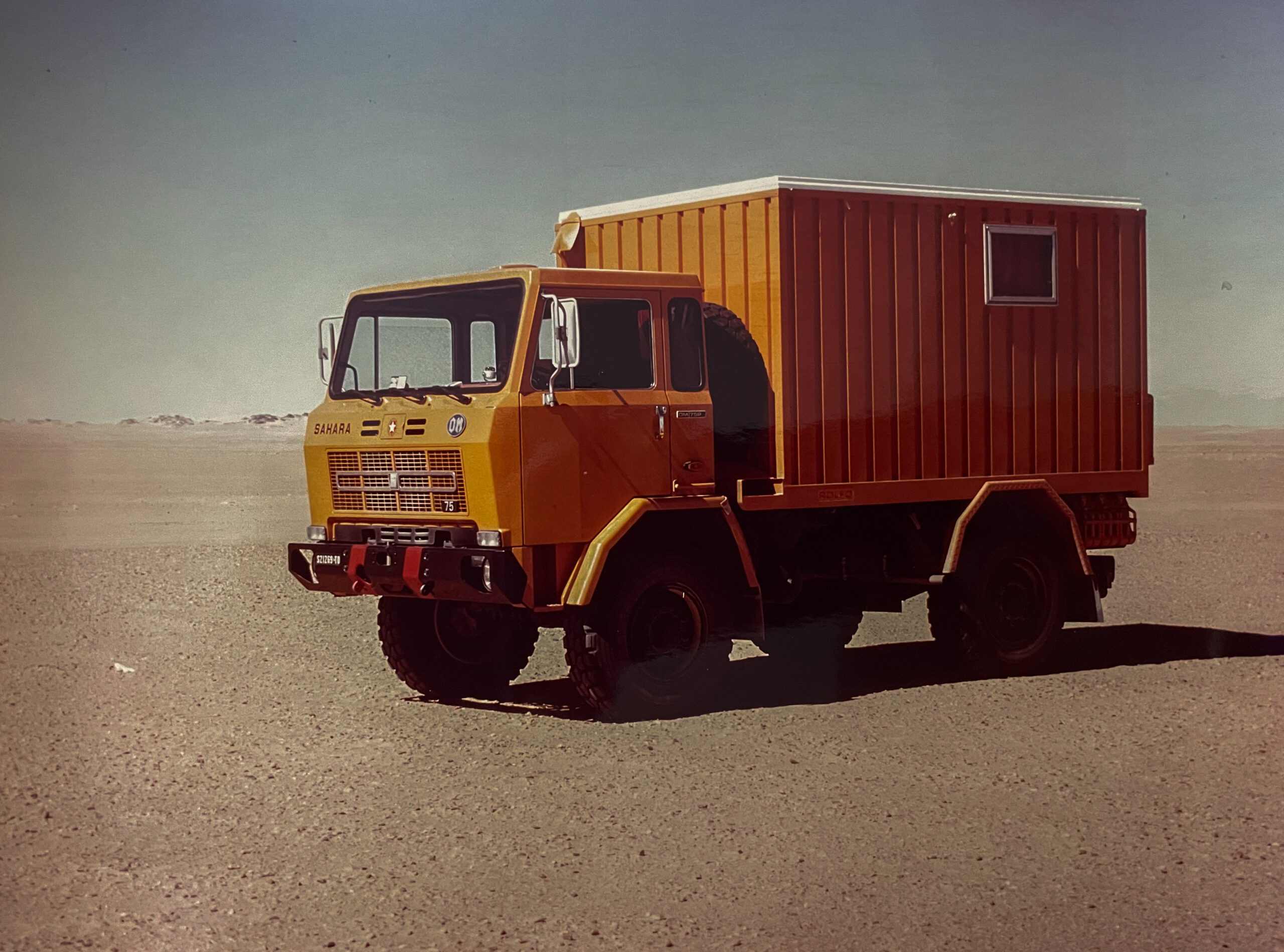
My Daddy was my hero, and while I was always happy and excited to help him customize the vehicles, handle the camping gear, and pack stuff and food in the storage compartments, I kept asking: “Daddy, when shall I come to Africa with you?”. At that time, traveling to Africa required many vaccinations, and clean water and fresh food were not always available or reliable since we had no fridge. In addition, I was a bronchitis kid, so my parents were a bit concerned about my compelling request. However, a Daddy can’t say no to his only daughter for too long, and, extending my Winter-break/Christmas holidays, I started Overlanding.
Memories of those travels are fixed in my brain even after 45 years. This is one of them.
We were driving on a sandy and bumpy dirt road in Niger, and as often it happens, we took a secondary, “parallel” trail to avoid the worst of the potholes. Unfortunately, after driving for 2 or 3 hours, the itinerary made a close loop: it was a dead-end! Our friends Orazio and Teresina were traveling with us on their blue Toyota FJ45; however, after a few minutes at the dead-end, a green Land Rover arrived, and soon after, a Peugeot 104! So we all followed the “wrong” trail.
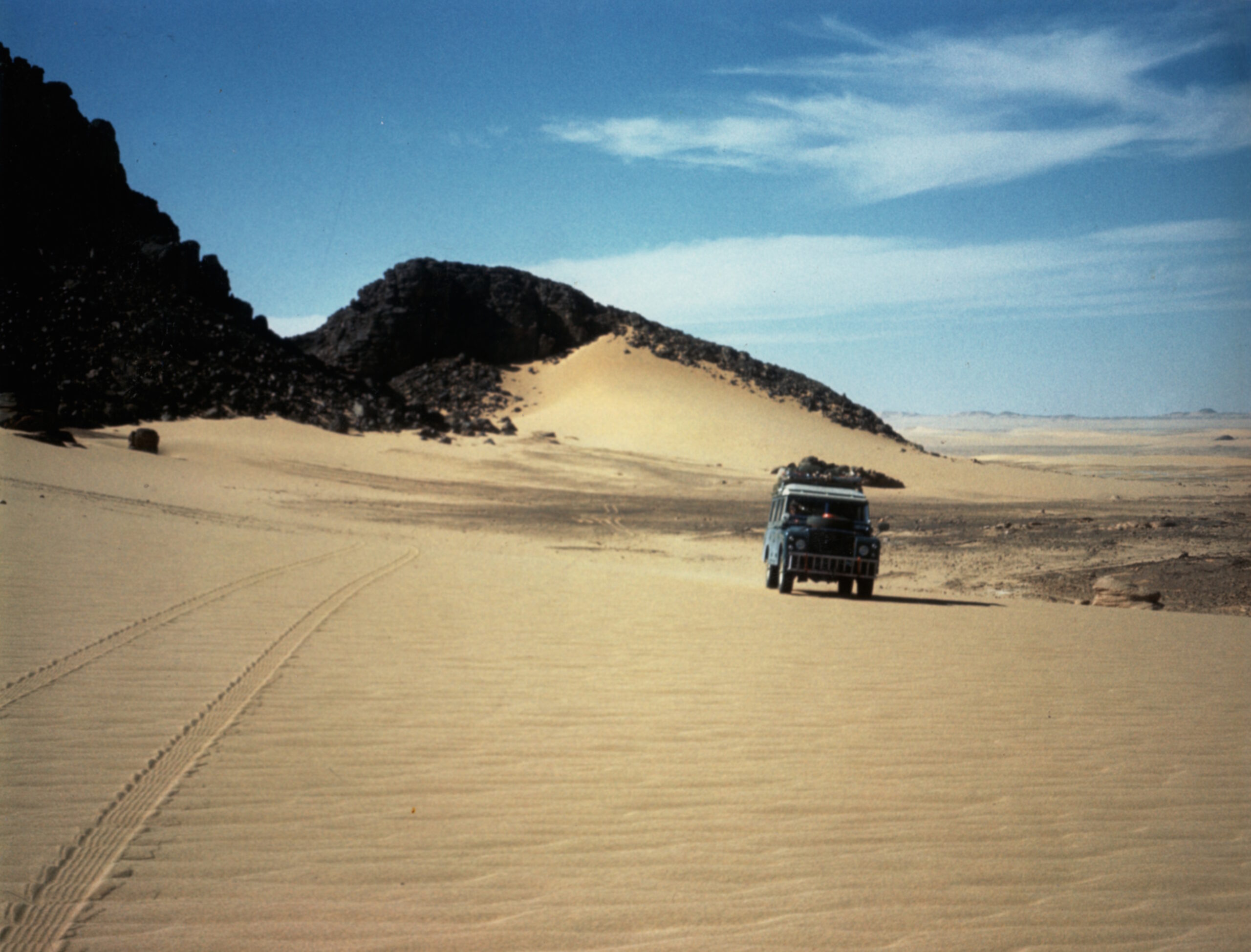
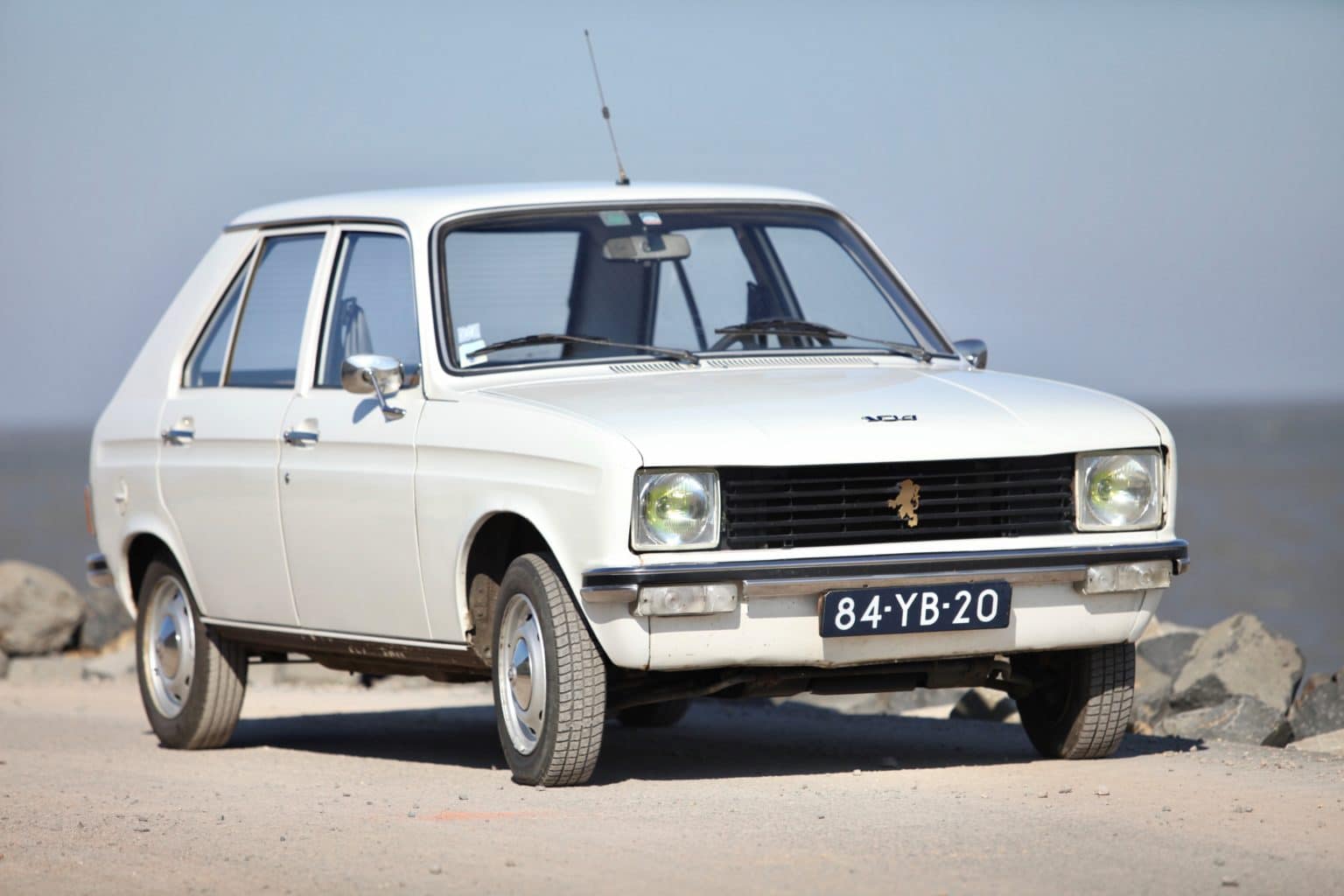
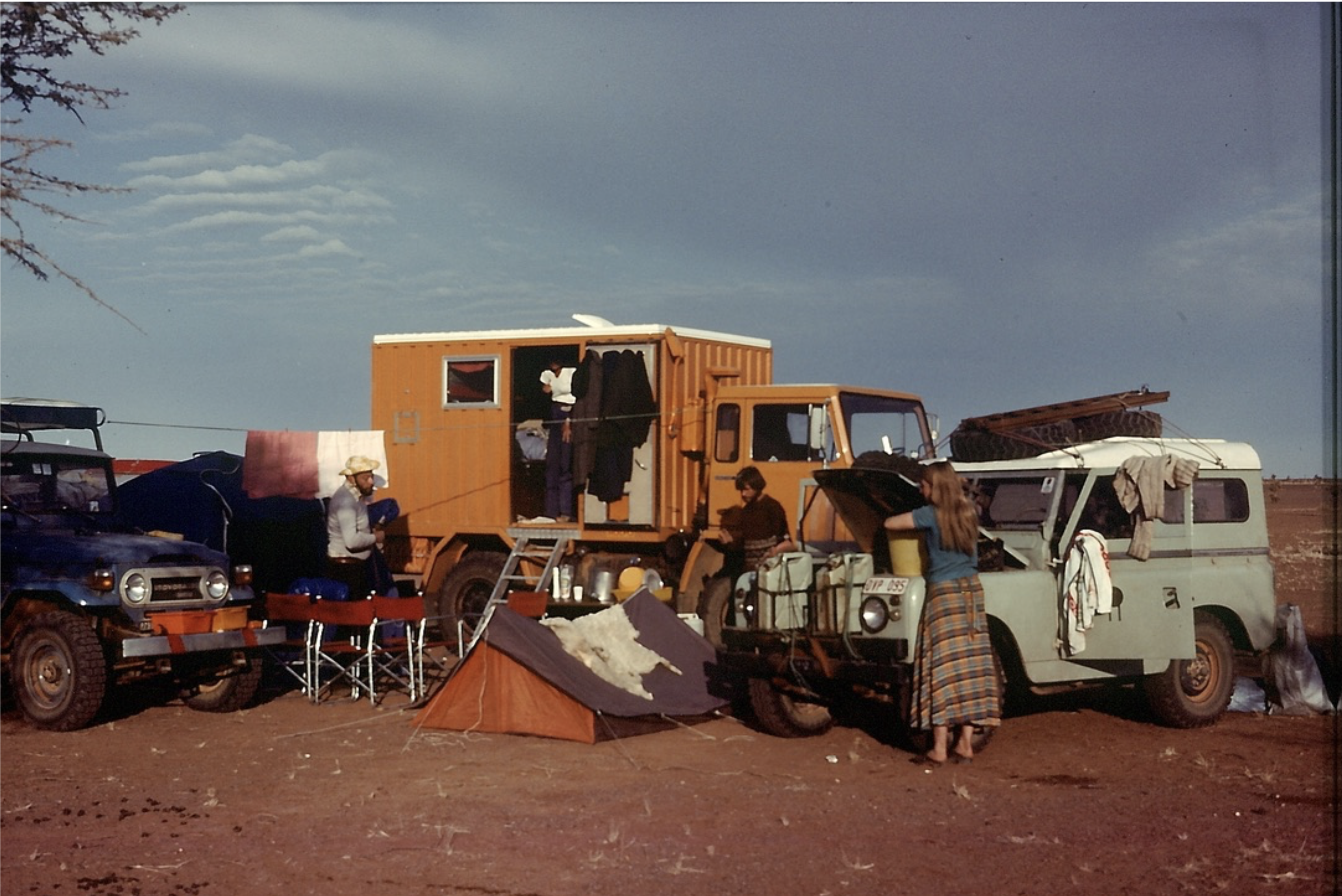
On top of that, we were all too short on fuel to drive back on the same itinerary and reach the “closest” gas station. We didn’t see any other vehicle in the last 2 days, so it was very unlucky that someone could rescue us before getting out of our drinking water. What could we do?
Daddy opened his big orange folder and started studying the maps looking for our approximate position based on the time of the day, the compass, the mountains, and the dunes around us. In the late 70s, we have to remember that GPS was still an unknown subject. Then, he tracked on the map an off-road itinerary across oued (dry riverbeds), canyons, and dunes that eventually would lead us to a little village signed on his map, hopefully in 3 or 4 days.
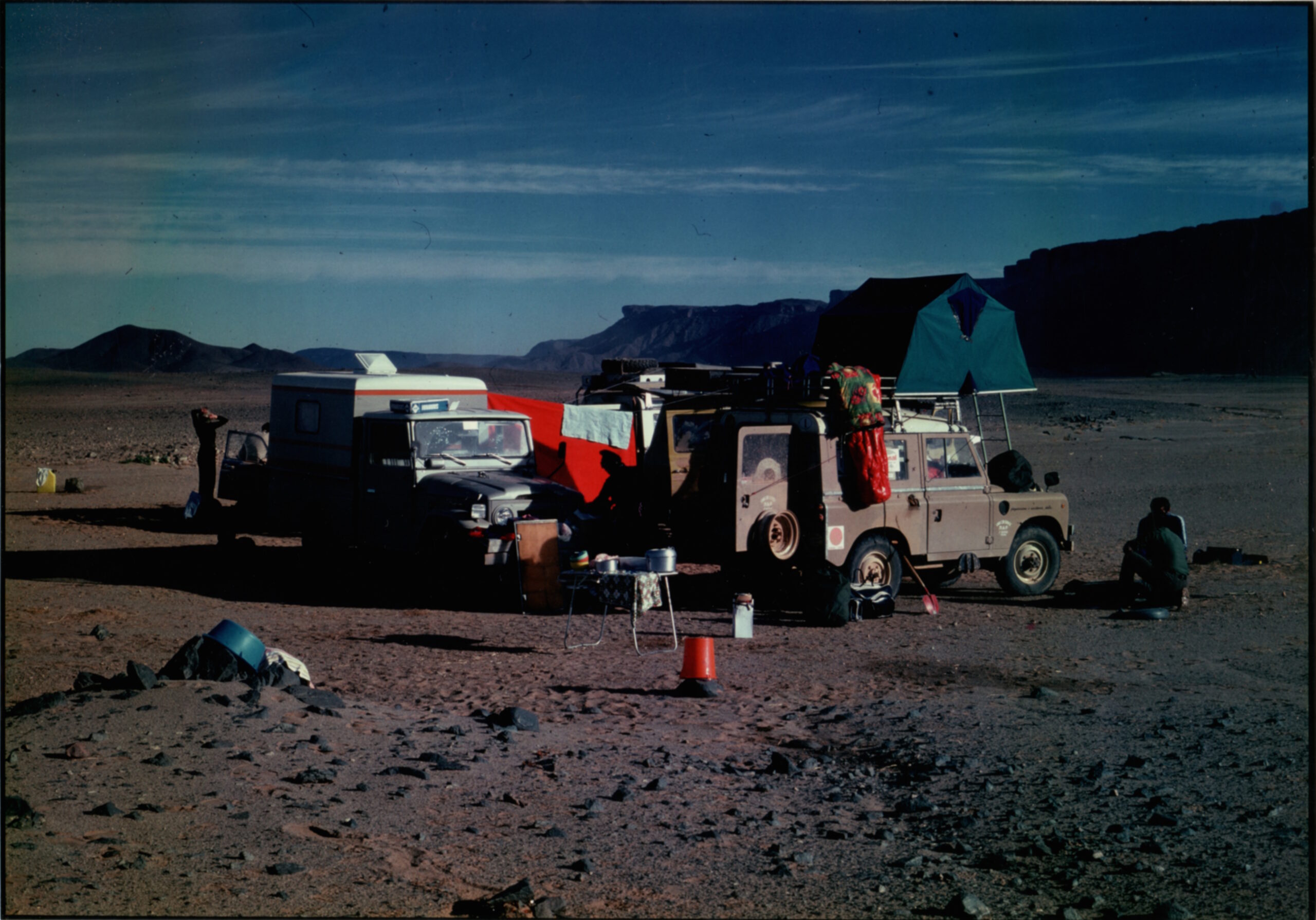
Daddy managed a quick briefing: “I’m pretty confident about this itinerary. However, we don’t know each other, so feel free to choose. Nevertheless, if we stay together, we have chances to support each other on the trails and share food, water, and fuel in the next few days. However, it’s your choice.” Of course, there was no choice, and everyone was on board. It was almost sunset, so we camped, and around the campfire, we started talking with our new travel mates. Onboard the Land Rover: Pierre and Christine, a Belgian couple and an Australian hitchhiker traveling across the globe with a $1 daily budget. On Peugeot 104, there was a Swiss couple. I remember her John Lennon-style little round glasses and his jeans overalls on a dusty t-shirt whose color was similar-white just under the suspenders.
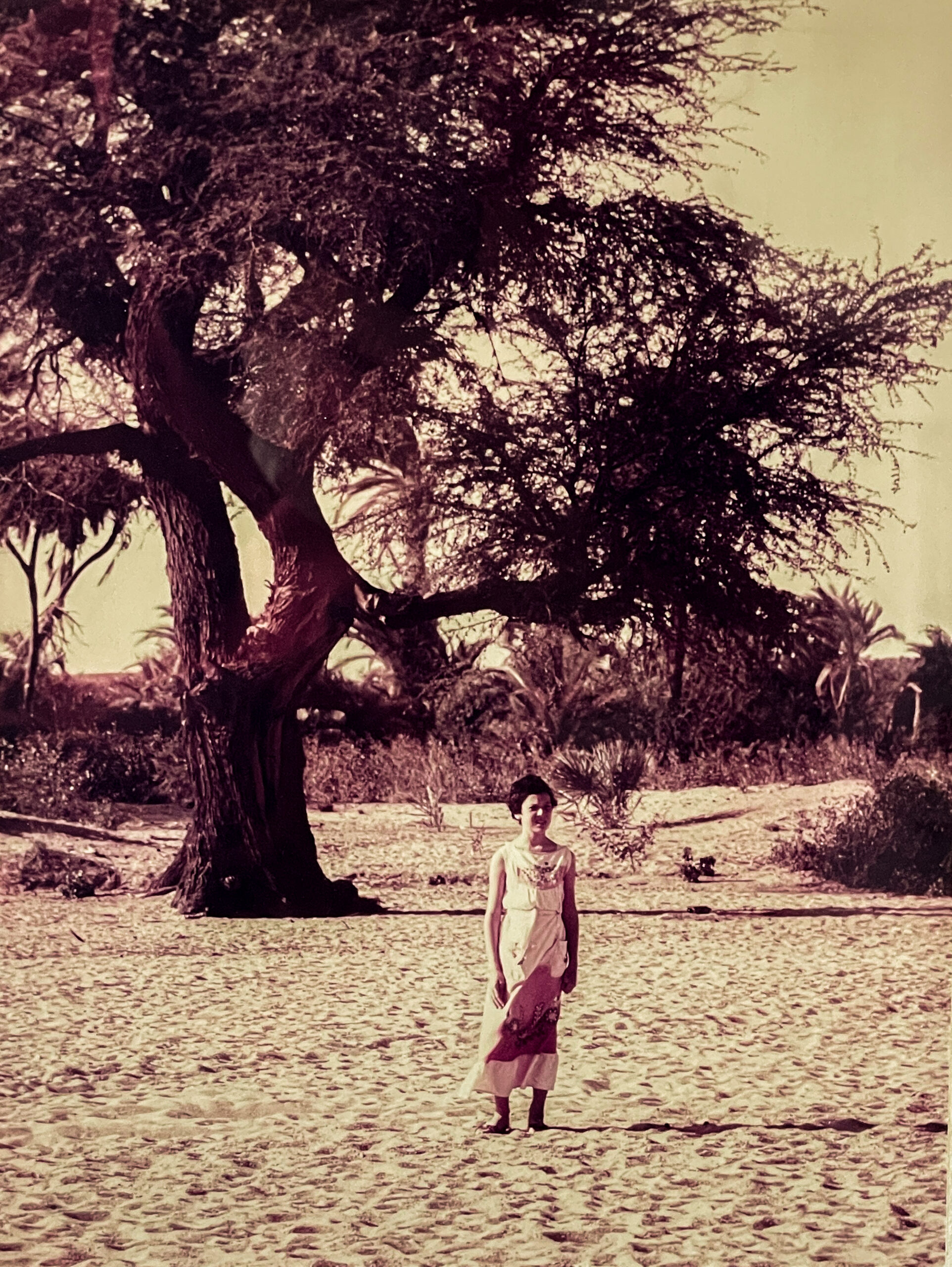
On the first day of our off-road and off-track itinerary, we drove on soft sand, dry pans, and rocky paths, which were very challenging for the Peugeot 104 that was being towed almost all the time. In the afternoon, Daddy saw far away, under the umbrella acacia trees, a group of Tuaregs. He stopped Maciste and suggested our travel mates stay far away while we approached them with our vehicle. My mother and I stayed in the truck, and Daddy joined the group of men resting in the shade.
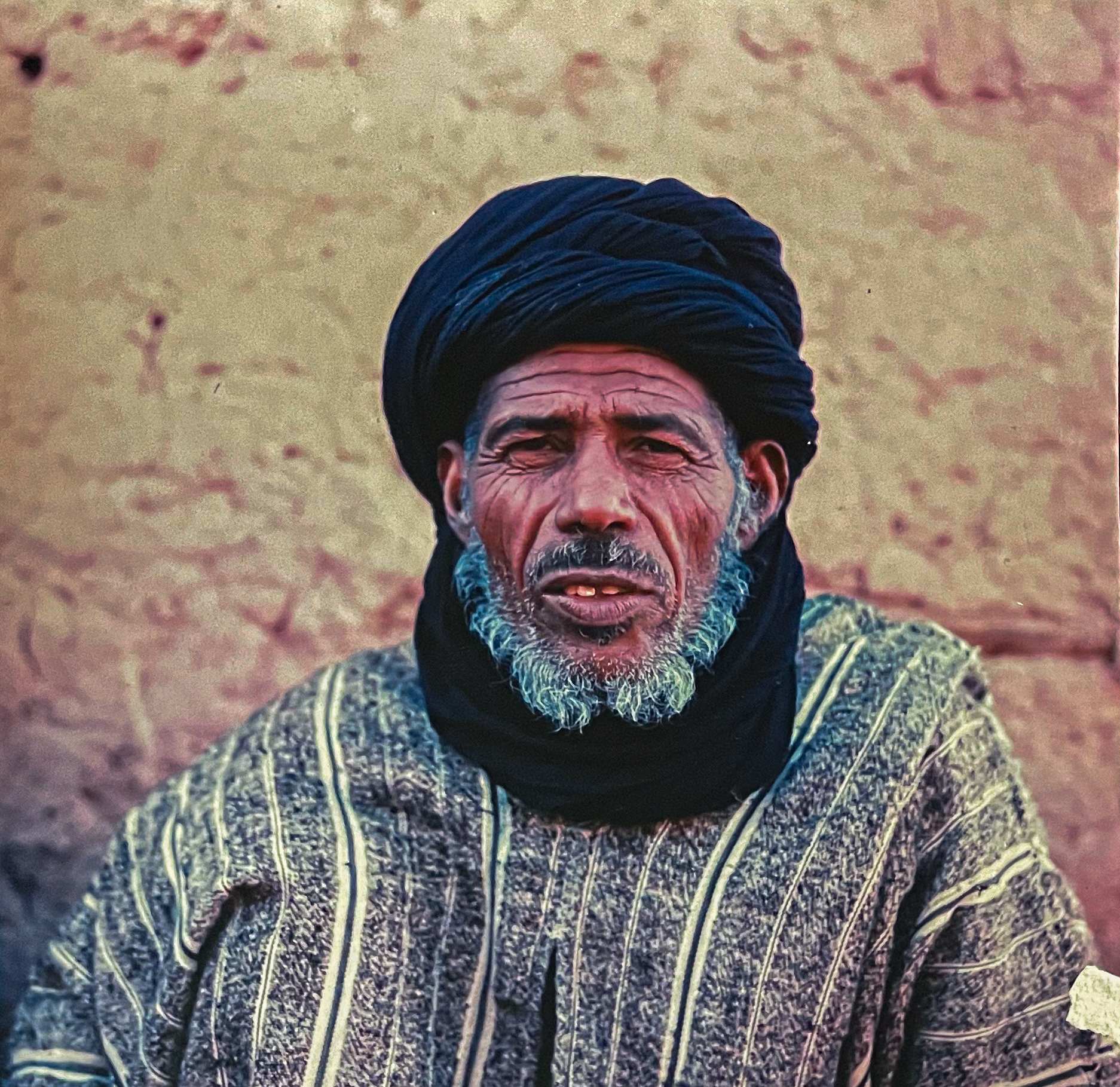
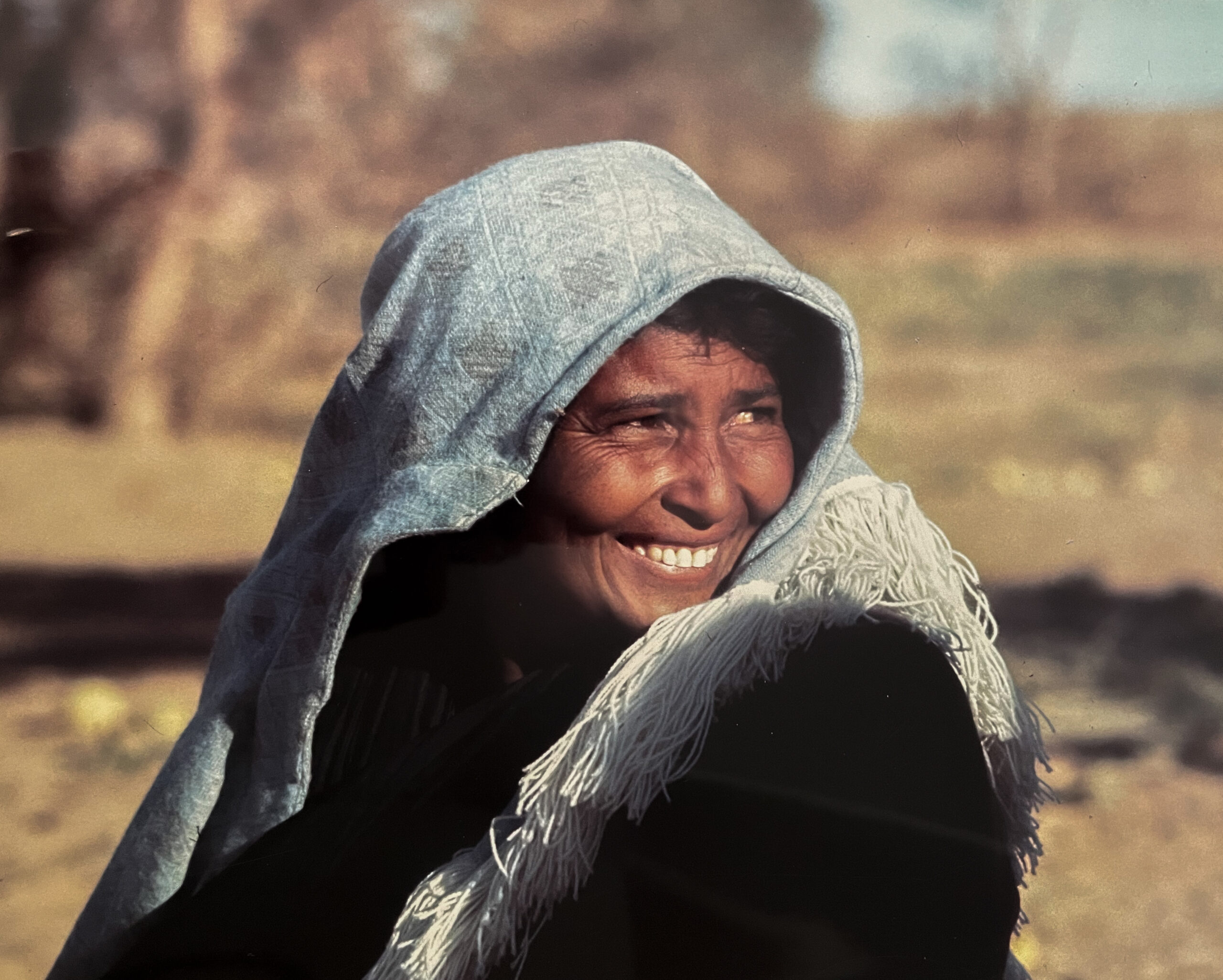
Tuareg people speak their own language, the Tamashek, which is different from the Arab language, the primary language spoken in Saharian countries, and at that time, they did not even speak French, the second language that is common in the former French colonies of North-Western Africa. Not having a common language to understand each other, my Father approached them with a simple but appreciated gift: cigarettes to let them know our peaceful intentions. Then, he pointed in a direction and named the village that was supposed to be there. The Tuaregs ironically smiled and pointed in a different direction, asking for more cigarettes. Daddy pointed in another direction, naming another village, and again, smiling, the men pointed in another direction.
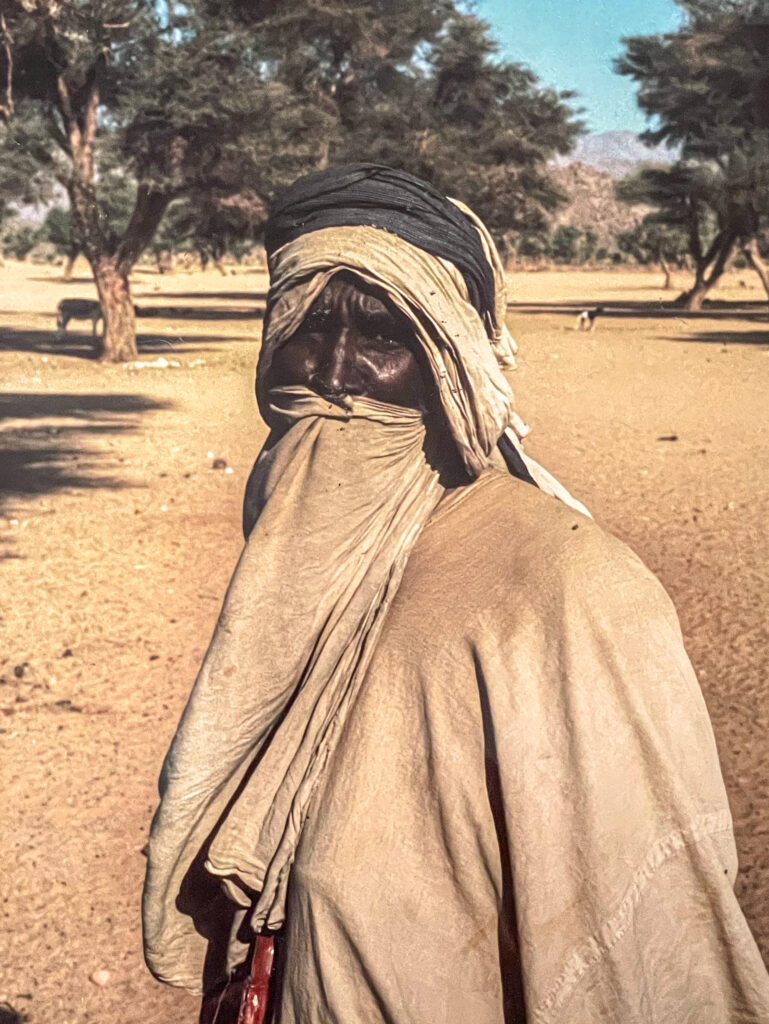
Tuaregs are nomadic tribes of the Sahara desert. As proud nomad people do not belong to a specific country, this is why they were unofficially ethnically persecuted and subject to ethnic cleansing in those times. They lived and roamed in secluded areas of their land, the Sahara desert, trading salt, dromedaries, and dates, and some of them were known as marauders. A kind of pirate of the desert. In those days, the only available “vehicle” for Tuaregs was their elegant white mehari dromedaries, and while crossing the desert, their survival supply was only 9 dried dates a day. So when they saw us driving off track, in the middle of an extremely remote area, days of travel far away from any official trail, they saw an opportunity. They have just to wait: soon, we will be out of drinking water, and in less than one week, they will have access to our vehicles and supplies.
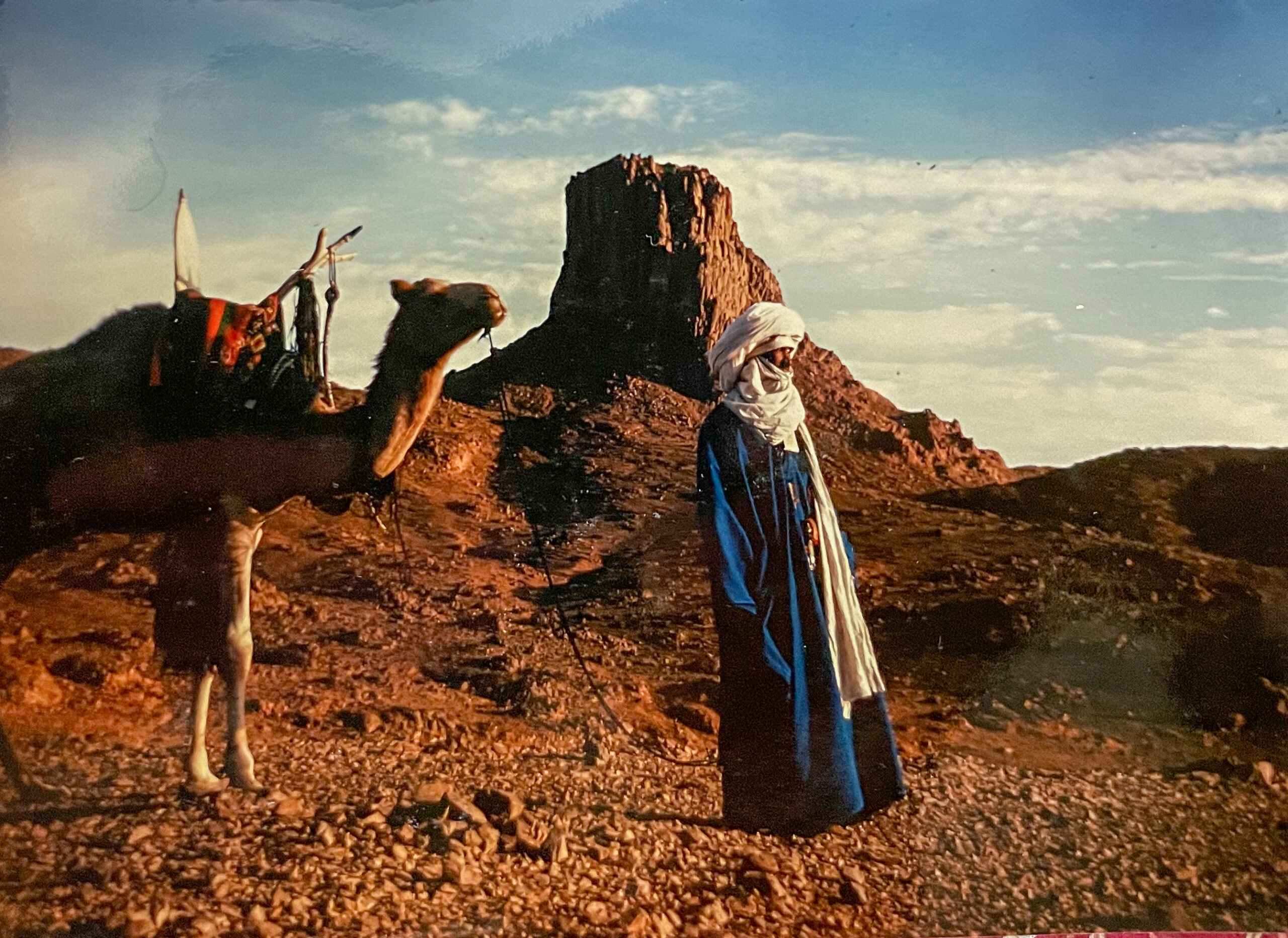
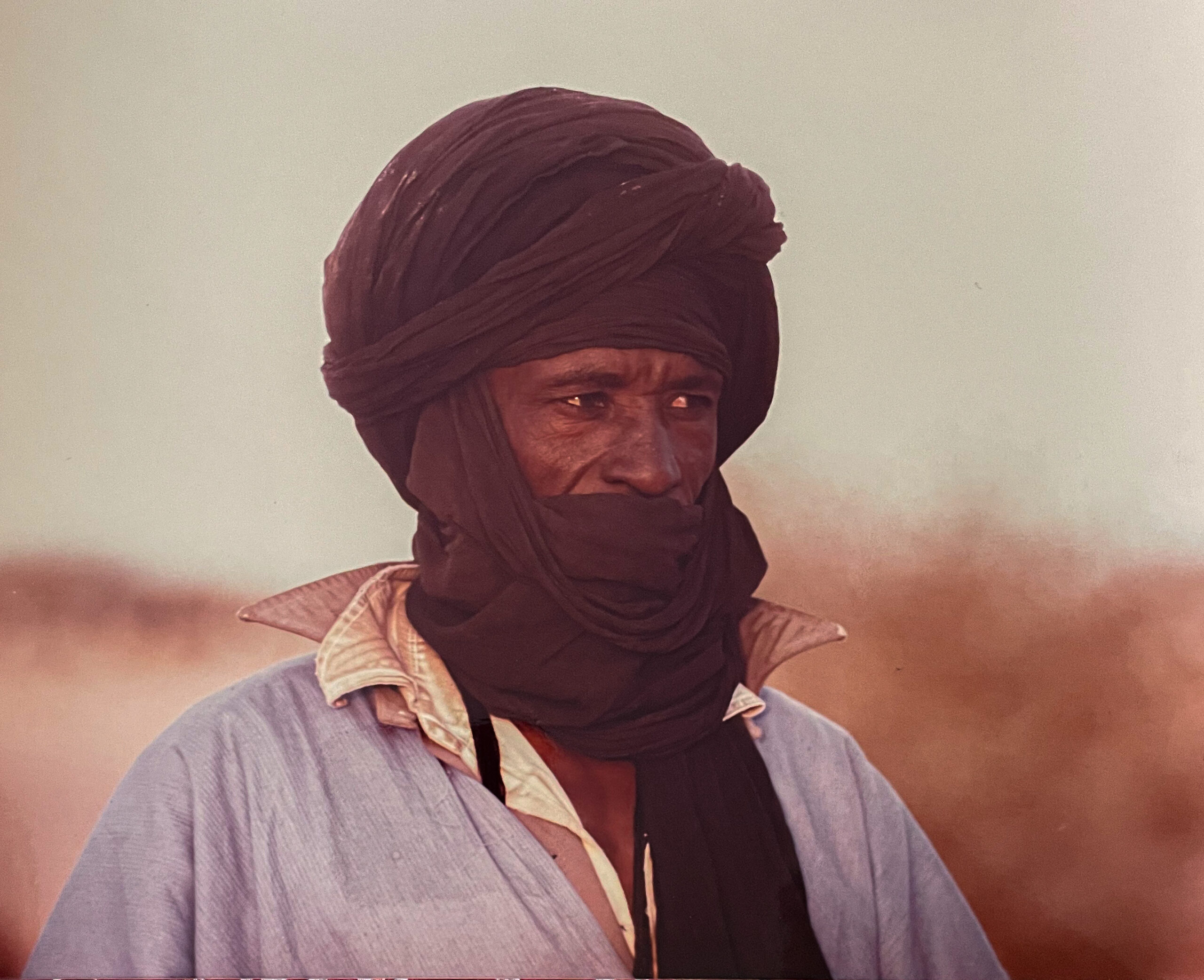
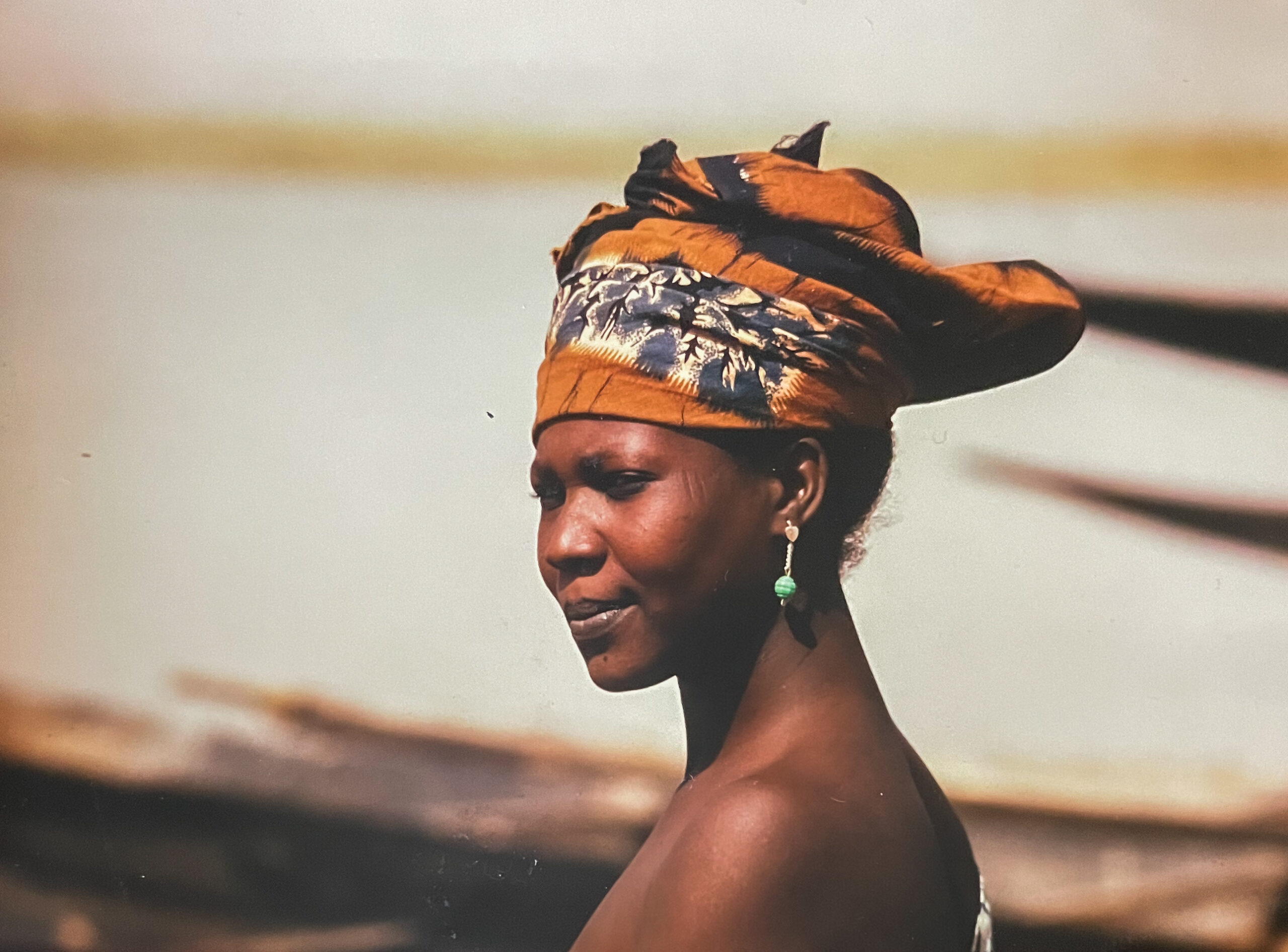
Daddy was puzzled by the contrasting directions they suggested, and while he was walking back to us, saw an old Tuareg sitting alone under an acacia tree. He approached him and suddenly pointed in one direction, knowing it was the wrong one, and named a village. The old man, who wasn’t aware of the joke the other men were playing with us, said: “Botna!”, “no ” in Tamashek, and pointed to the exact direction my Father expected to find that village. At this point, greeting the old Tuareg with some more cigarettes, he reached us smiling, confirming that the direction we were following was the correct one. As a matter of fact, after 2 more days of traveling and towing the Peugeot, at sunset, we reached the little school village of Teguida Intagait, as Daddy was expecting.
As a kid adoring his hero, I fully trusted my Father, so I lived this experience as if anything different could happen: Daddy knows what has to be done; we have just to follow him since this is the best and only choice. However, now I’m a mature woman and understand that our travel mates could have had different feelings.
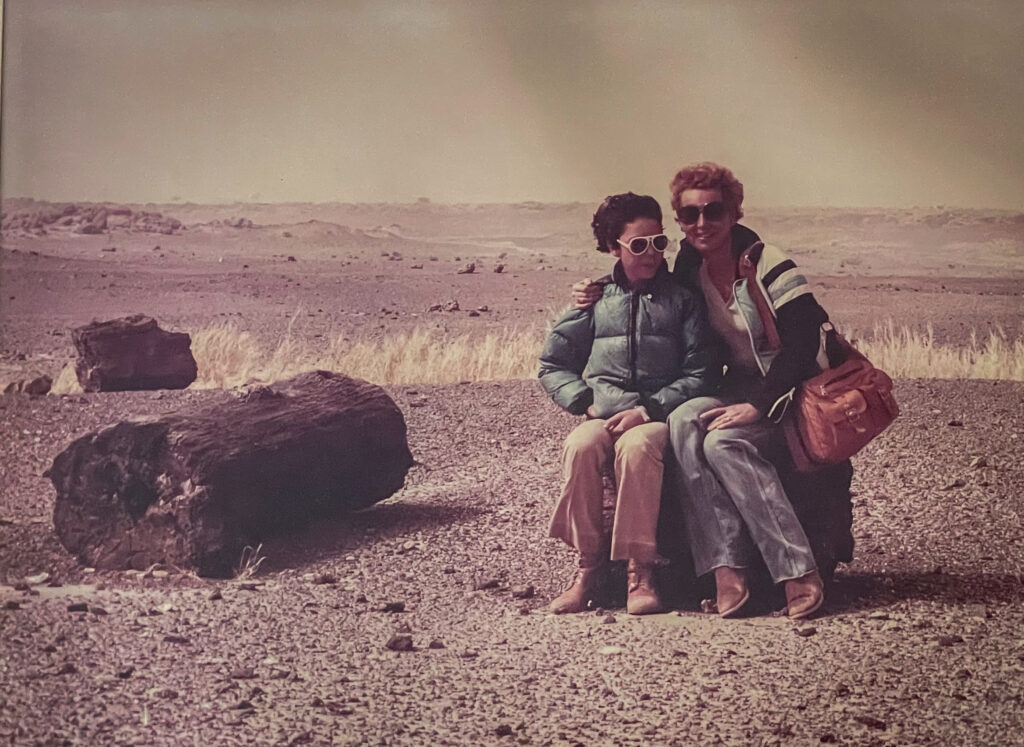
First of all, my Mum. She was living these experiences with conflicting feelings: trust in her husband and, at the same time, she was terrified because of her deep concern about having her only child in this situation.
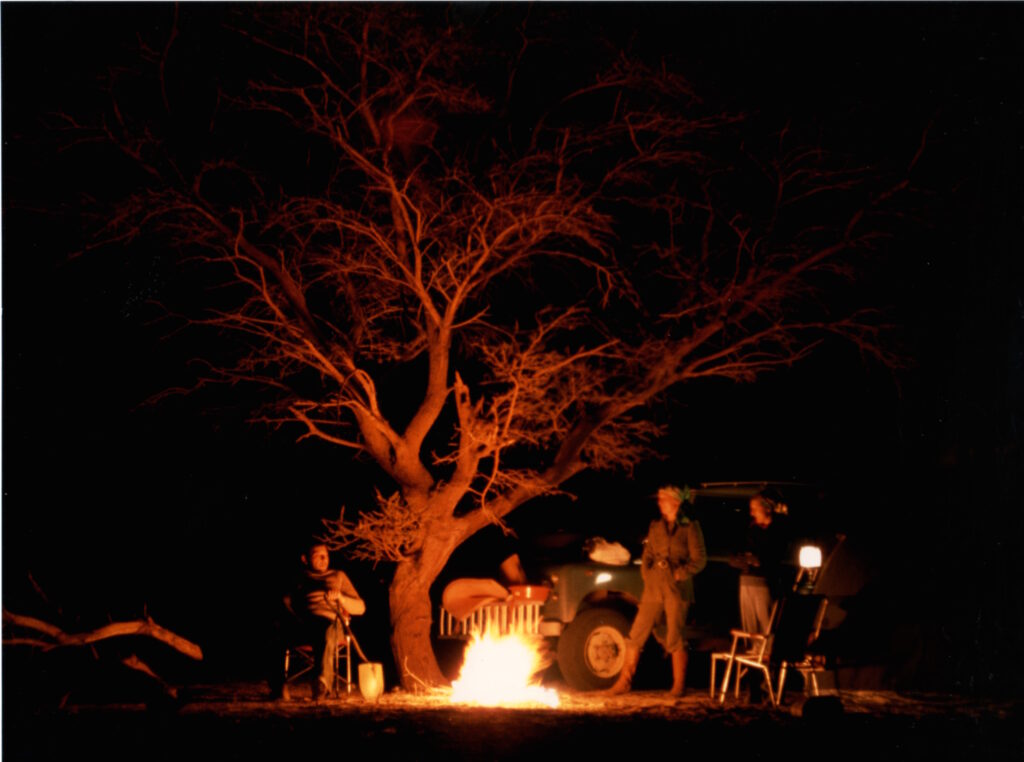
Orazio and Teresina traveled a couple of times in Africa with us. They always trusted my Father’s experience, following him, whatever.
They always had a positive attitude. However, maybe in those three days, they questioned themselves about their confidence in following him, “whatever happens”.
Pierre and Christine were adventurous souls, traveling across Africa only with a Touring Club guidebook and a large ratio-scale map. They knew some of the tracked routes could be tuff trails; however, they should be some kind of trail, at least. They were building their overland knowledge day by day on the field. I think they got this experience as part of their overland learning process.
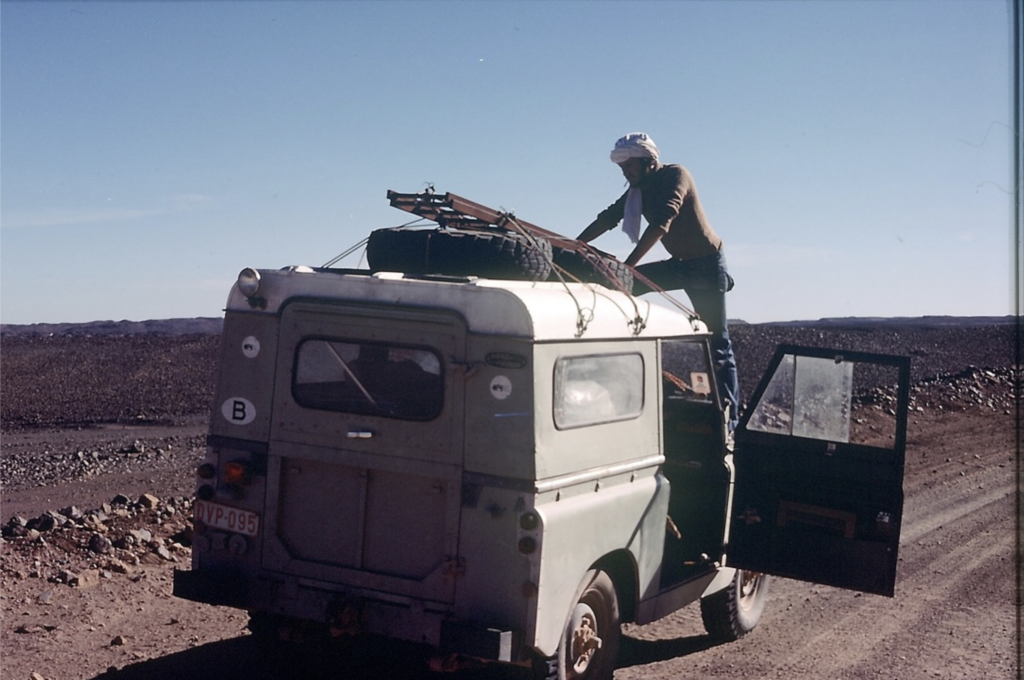
However, none of them had the deep knowledge and experience you can build just by studying and, at the same time, consistently traveling overland in the same countries for more than 15 years.
The Swiss couple lived in a bubble, barely talking at the camps. They were driving a sedan, the Peugeot 104: the most unadapted and unreliable vehicle on those routes. 2 days before we met, they lost their group carrying their fuel and supply, and they were almost desperate. Nevertheless, I think they felt so lost that any alternative could only be better, even if extremely uncertain.
I clearly remember the Australian guy when we reached Teguida Intagait. He jumped down from Pierre and Christine’s Land Rover and shook Daddy’s hand. No words are needed.
I reached some of the actors in this 45-year ago overland adventure. These are pills of their lovely memories.
Rosanna Damiani Vallinotto, Mummy
When we arrived at the school village, we were coming from an unusual direction, and since most of the kids had never seen European people before, I guess we had been the village news of the month!
<<When we arrived at the village, we were surrounded by all the kids, asking for “cadeau “, the French for “presents”. Angelo (my Father’s first name) asked the kids to stay in a line, so Teresina and I started sharing all our remaining food supplies with them.
Then, we visited the oasis close to the village, and all the kids followed us. After a while a very little baby girl took and shook my hand, saying “cadeau”.
We always brought candies for kids, on our African trips. However, that day we ran out since we had already shared all of them. So, I replied, “Sorry, I have no more sweets or other cadeau”. However, the baby girl kept shaking my hand and said: “Nom, nom. Cadeau pour toi” (“No, no, this present is for you”) and offered me a little almost-broken egg.
I felt so emotional, and could hardly avoid crying. I hugged the baby girl, and never left her hand for all the tour of the oasis.>>
Christine Verboomen, the pretty blonde Flemish girl
<<My husband and I were traveling across the Sahara on a 22-year-old Land Rover that had been our house for one year. Our navigation tools were a Michelin map of Northern and Western Africa, and a Swiss guidebook of the Touring Club, describing the different sand routes.
After traveling across these fabulous sandy deserts, and meeting awesome people, one day, we get lost. No GPS, no telephone, no internet: lost.
Suddenly we saw an orange FIAT truck and a blue Toyota. Angelo and Rosanna came out of the truck. I remember she was wearing clean white trousers, and a clean white t-shirt, while we were awfully dirt and full of sand after traveling for months in the Sahara.
At the camp, in the evening, they said “pasta per tutti” (“pasta for everyone”), and we ate spaghetti with butter sauce, drinking red wine. It was like meeting Santa Claus in the middle of nowhere. I’ll never forget it.
When we got lost, Angelo’s detailed maps allowed him to find our precise position and how to find the route. We were not lost anymore, and even more: we found new friends. Angelo and Rosanna were superb and funny, and our friendship lasted for years.>>
Orazio "Orazietto" Ostino, the Travel Mate everyone would like to have
A few months after sharing his memories, Orazietto passed away and never had the time to read this full article. 1941-2022
<< It seems to be hard to remember events that happened 40-50 years ago. However, when I got your call, I suddenly felt like I was still there: the sand, the wind, awful trails, unbelievable landscapes, million-star nights, and also friends who are no longer with us. Wonderful experiences melt with difficult episodes. After your call, everything suddenly came out into my memory.
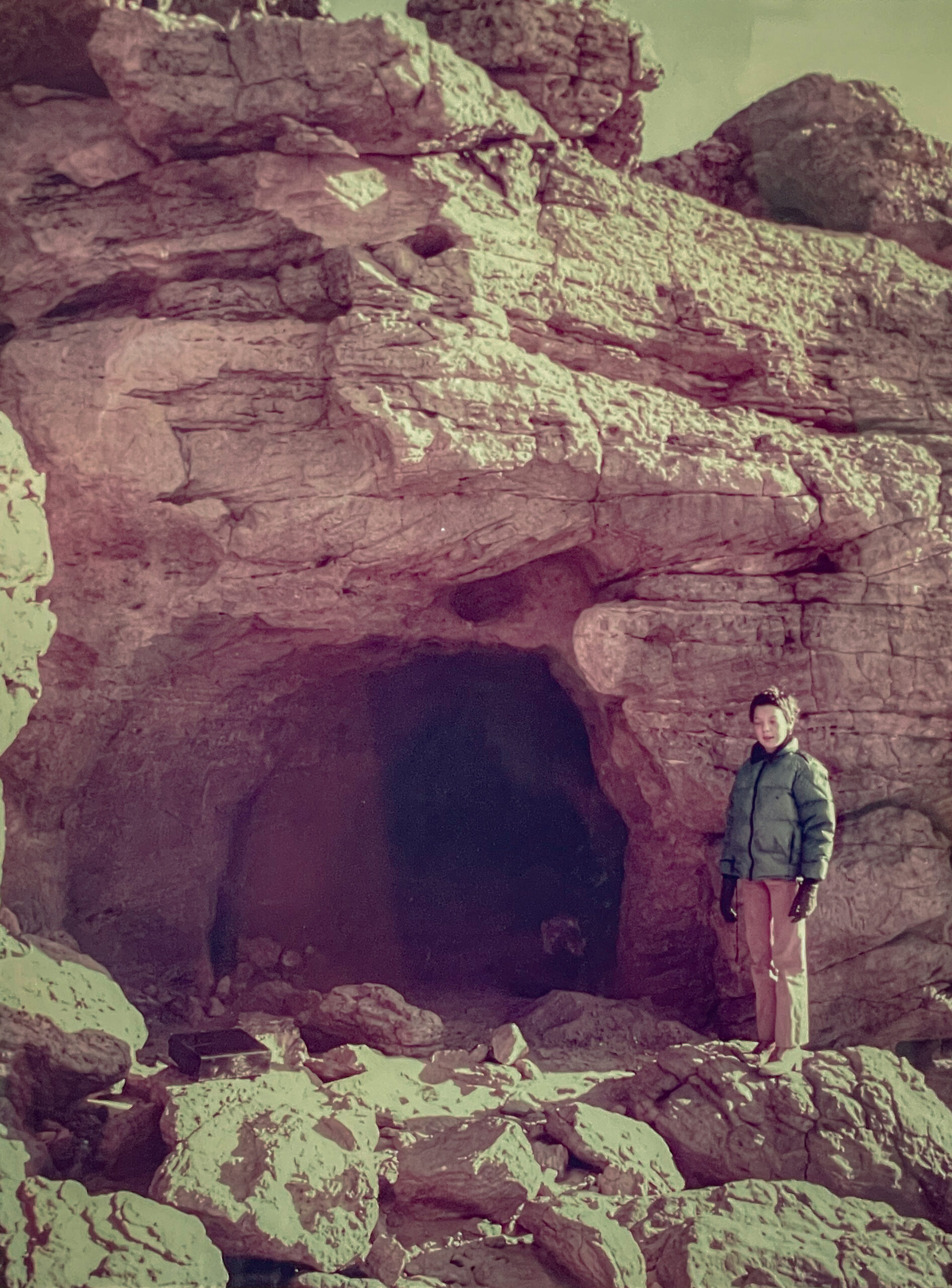
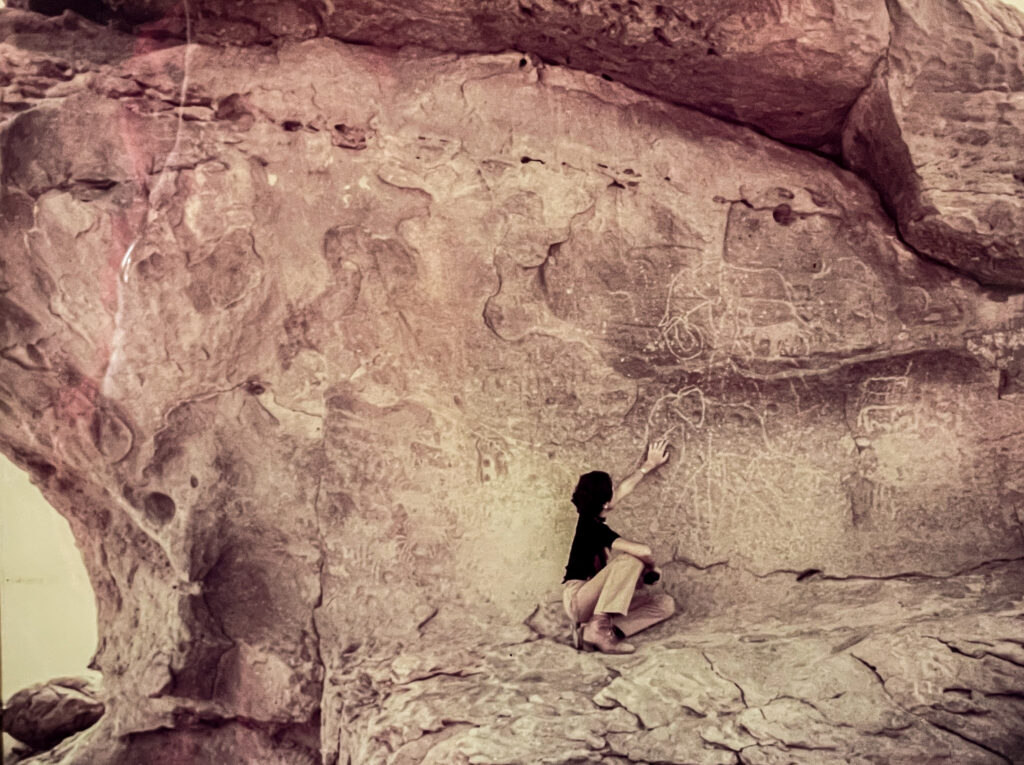
I remember Pierre, Christine, and the Swiss, when we reached the school village, and the kids guided us to close-by petroglyphs. Many of these prehistoric paintings were poorly preserved and your Mum said, in Piedmont dialect: “Tuti toc”, meaning, they are all in small pieces. However, the kids loved the onomatopoeic sound of these two worlds and kept repeating them like a mantra song: “Tuti-toc, tuti-toc, tuti-toc”, while we were all laughing.
All those memories built our long-lasting love for Africa, which is still today so intense.>>
Pierre Hoorens, the adventurous Belgian guy
Pierre reached me on Facebook a couple of years ago, and this lovely online meeting, after 45 years, is the idea for this article. Thanks, Pierre, for sharing with me the pictures of our camps in the desert. Precious memories, as our overland friendship.
He is still today an active overlander with his camper van.
Angelo Vallinotto, Daddy. 1934-1993. My hero
This article is also available in Overland Adventures Magazine – Summer 2022 edition.
We build our personality from imprinting, the phase-sensitive learning that is rapid and apparently independent of the consequences of behavior, and from life experiences. Definitely, Africa is part of my DNA.
Even if my long-lasting overland trips have consolidated my knowledge and love for this land, people, and wildlife, the call of the wild still attracts me today.
Learning from Daddy, at v-adventures, we create enjoyable tailor-made overland itineraries, consolidating in our adventurous clients the knowledge and respect of the destinations they are exploring. Our slogan is: “Travel with us, and we will make sure to exceed your expectations”.
Valentina Vallinotto
- Founder and Managing Director at v-adventures, a company based in the United States
- Co-owner at Ndutu Safari Lodge, located in the Ngorongoro-Serengeti ecosystem, Tanzania
- FB page: @v-adventuresLLC
- Instagram: @v_adventures_ulisse
- YouTube Channel: @v-adventures
- Blog & Newsletter